
Indoor Activities for Kids: Fun Ideas to Do at Home
Indoor activities for kids work best when they are simple, quick to set up, and easy to adapt for different ages. This guide gathers indoor games, creative projects, quiet play, and active ideas you can do at home with everyday supplies — plus party games, family favorites, and answers to common questions.
10 Fun Indoor Games to Play Right Now
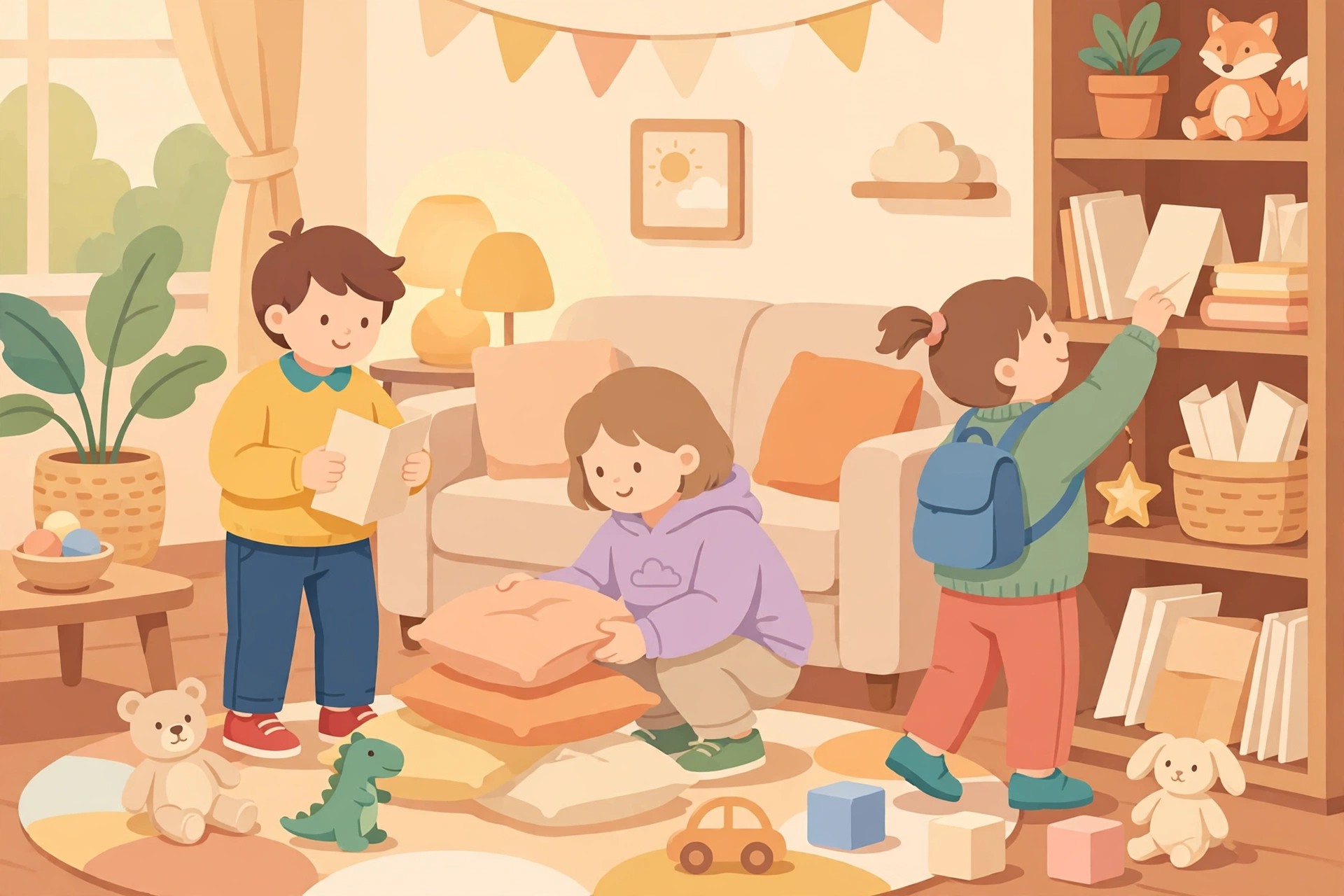
Start here for fast ideas using things most homes already have.
Hide-and-Seek With a Twist
One person hides while the others count, then search the agreed area. Needs: no supplies. Ages 4–9. Steps: 1) Agree on in-bounds rooms. 2) Pick a counting spot. 3) Try hiding a stuffed animal instead.
Indoor Scavenger Hunt
Find things from a short list, such as something round or something starting with B. Needs: paper, pencil. Ages 4–9. Steps: 1) Write 8–10 clues. 2) Set a time limit. 3) Celebrate the finished list.
Charades
Act out animals, jobs, or stories without speaking while others guess. Needs: paper slips, bowl. Ages 6–12. Steps: 1) Write simple prompts. 2) Take turns acting. 3) Keep rounds short so all play.
Freeze Dance
Dance to music and freeze when it stops. Needs: music, open floor. Ages 2–9. Steps: 1) Clear a safe space. 2) Start the music. 3) Pause at surprise moments.
Balloon Keep-Up
Keep a balloon in the air with hands. For younger children, use a soft beach ball instead. Needs: balloon or beach ball. Ages 4–9. Steps: 1) Clear breakables. 2) Count taps. 3) Beat your last score.
Simon Says
Follow only instructions starting with “Simon says.” Needs: no supplies. Ages 4–8. Steps: 1) Choose a leader. 2) Mix easy and tricky instructions. 3) Let each child lead.
Pillow Obstacle Course
Crawl, hop, and balance through pillows and a blanket tunnel. Needs: pillows, blankets. Ages 2–8. Steps: 1) Build three stations. 2) Show the route once. 3) Time runs or play for fun.
Card Matching Game
Flip two face-down cards per turn to find pairs. Needs: matching cards. Ages 3–8. Steps: 1) Lay cards in rows. 2) Flip two per turn. 3) Keep matched pairs.
Story Chain Game
Each player adds one sentence to a shared story. Needs: no supplies. Ages 5–12. Steps: 1) Pick a starting character. 2) Add one sentence each. 3) End with a twist chosen together.
Pictionary on Paper
Draw a word while others guess, on paper or a whiteboard. Needs: paper, markers. Ages 6–12. Steps: 1) Write prompt cards. 2) Set a one-minute timer. 3) Take turns drawing.
20 Inside Games for Every Kind of Day
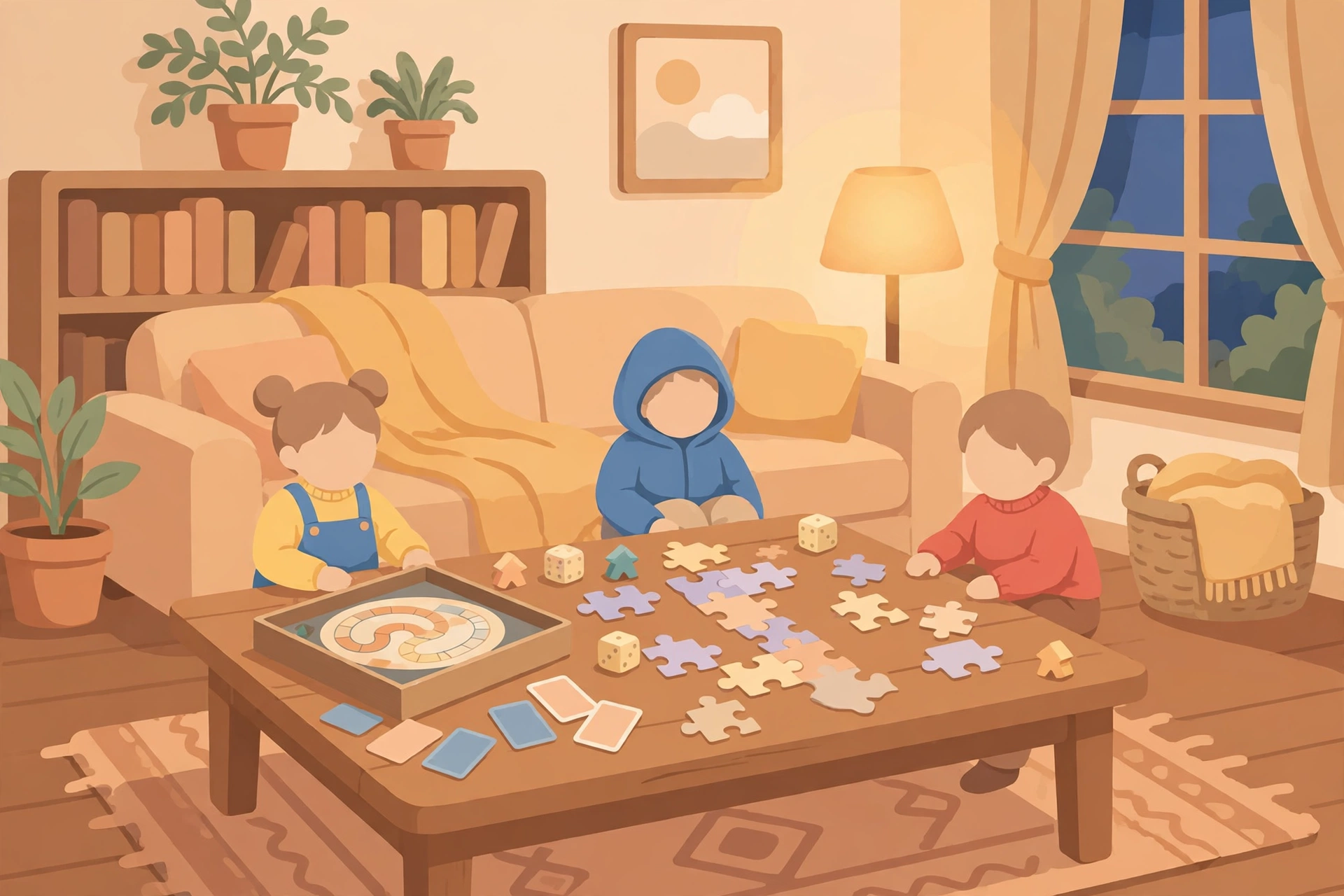
Mix active, guessing, and tabletop options from this longer list.
- I Spy — spot something from a color or letter clue (ages 3–8).
- Twenty Questions — guess in 20 questions (ages 6–12).
- Bingo with homemade cards — pictures, numbers, or words (ages 4–9).
- Dominoes — match numbers in long lines (ages 5–10).
- Building challenge — tallest tower in 10 minutes (ages 4–10).
- Hot potato — pass a soft toy while music plays (ages 3–7).
- Hide the thimble — hide a small object (ages 5–10).
- Alphabet hunt — find one object per letter (ages 5–9).
- Would You Rather — silly choices spark talk (ages 6–12).
- Memory tray — name the missing object (ages 4–9).
- Follow the leader — copy moves around the room (ages 2–6).
- Indoor bowling — roll a soft ball at bottles (ages 3–8).
- Paper airplane contest — fold, fly, measure distance (ages 6–12).
- Guess the sound — identify household sounds (ages 4–8).
- Dress-up relay — race to put on outfits (ages 4–8).
- Word ladder — change one letter at a time (ages 7–12).
- Card sorting race — sort by color or number (ages 5–9).
- Shadow puppets — hand animals with a lamp (ages 4–9).
- Slow-motion tag — move in slow motion indoors (ages 4–8).
- Talent show — songs, jokes, or tricks (ages 4–12).
If the weather turns wet, our rainy day activities for kids list has more ideas for those days.
Family Games to Play Inside Together
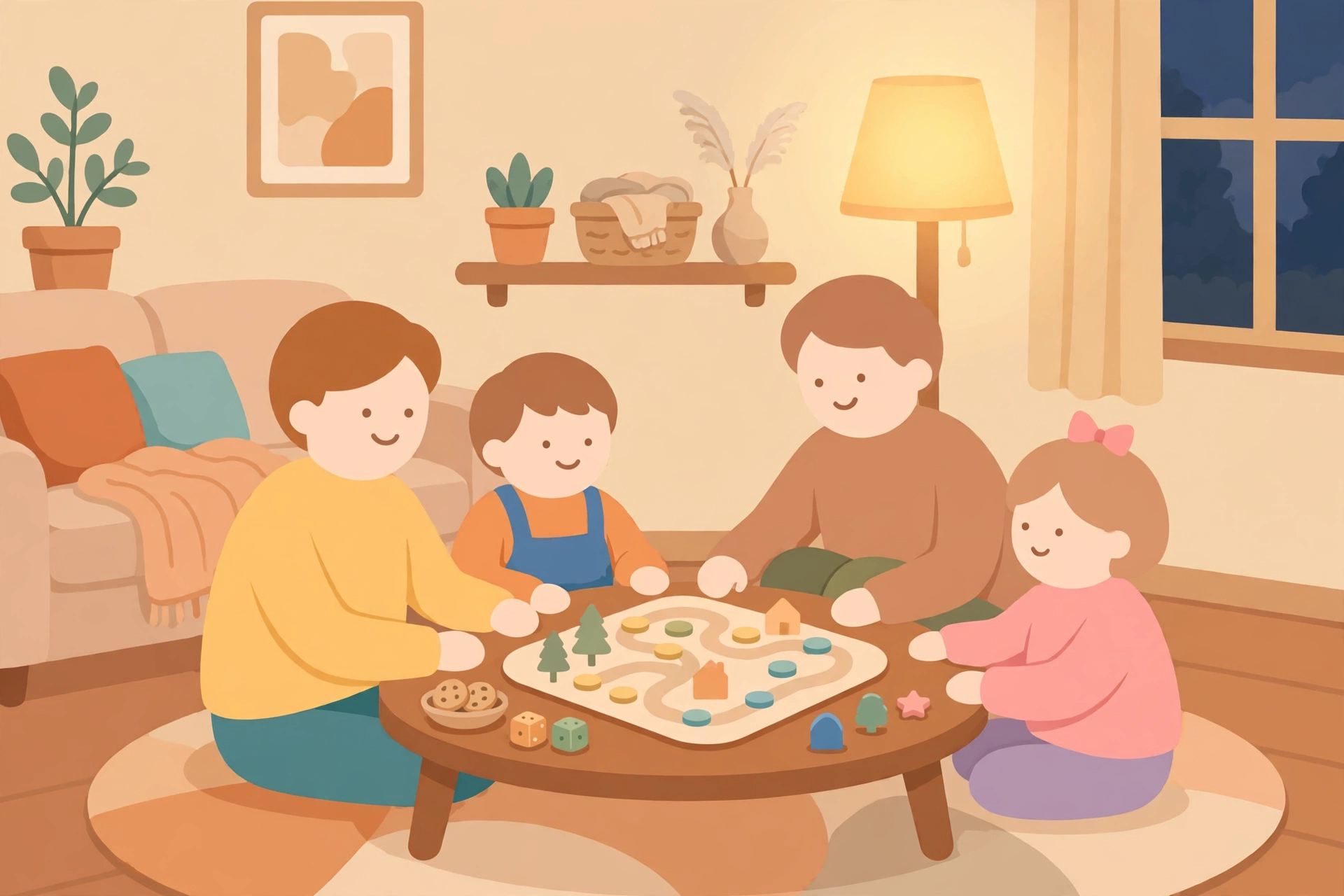
Choose cooperative options when younger children join, so every age has a real role.
Cooperative Puzzle Race
Finish a puzzle together before a timer runs out. Needs: puzzle suited to the youngest player. Ages 4–12. Steps: 1) Sort edge pieces. 2) Assign each person a section. 3) Finish together.
Family Trivia Night
Ask fun questions about animals, food, books, and family memories. Needs: question cards, score sheet. Ages 6–12, plus easy questions for younger players. Steps: 1) Write 15 questions. 2) Form mixed-age teams. 3) Keep score light.
Living-Room Bowling
Roll a soft ball at bottles or cups lined up in a hallway. Needs: six bottles, soft ball, tape start line. Ages 3–10. Steps: 1) Arrange pins in a triangle. 2) Roll twice per turn. 3) Reset and keep simple score.
Indoor Party Games That Keep a Crowd Happy
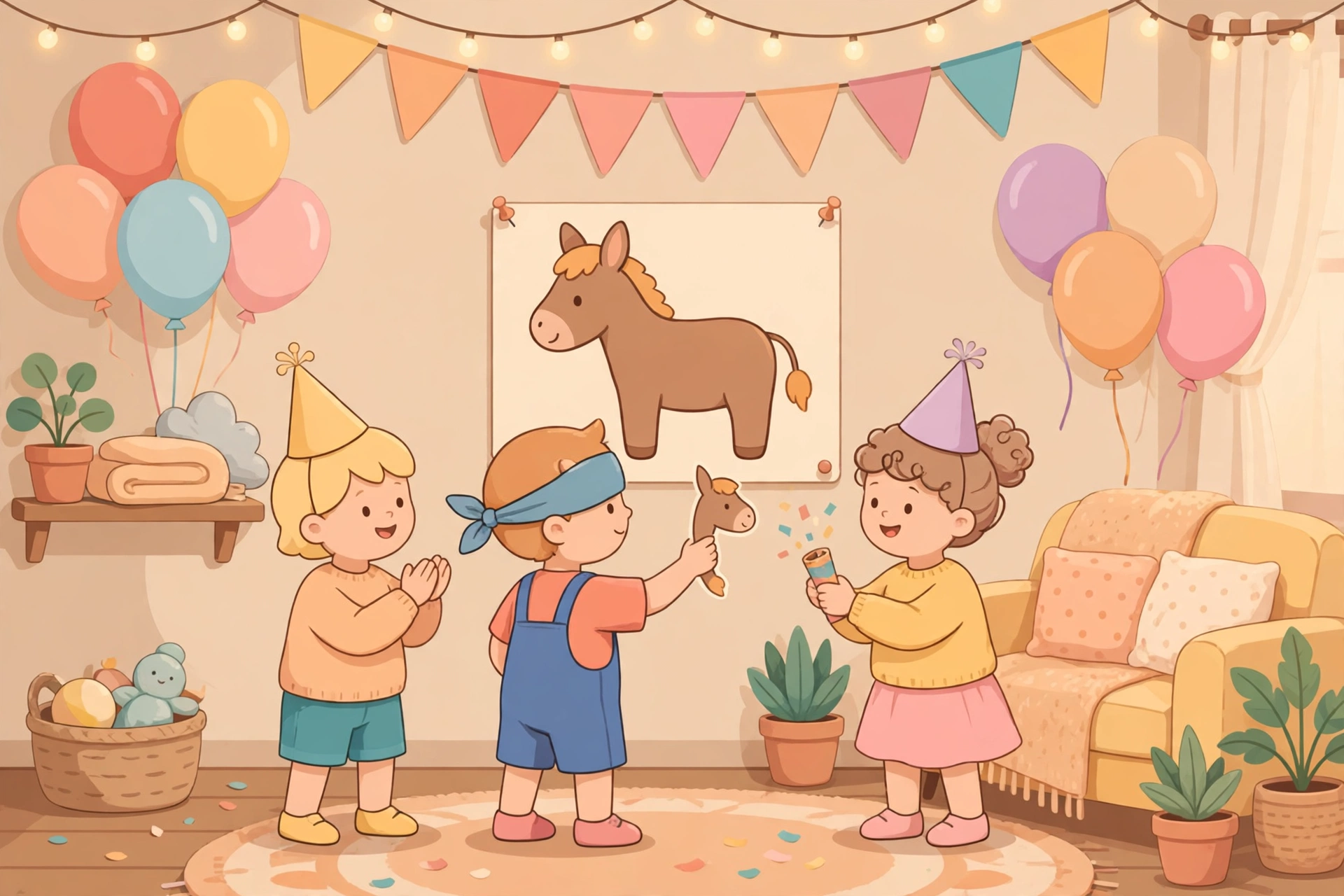
Plan short games, rotate often, and mix active, guessing, creative, and calm options.
Active (1–5): 1) Freeze dance. 2) Musical chairs with cushions. 3) Balloon relay. 4) Dance-off in pairs. 5) Animal walk race.
Guessing and acting (6–10): 6) Charades. 7) Who am I? 8) Guess the wrapped object. 9) Sound guessing. 10) Two truths and a fib.
Creative (11–15): 11) Silliest monster drawing. 12) Tallest cup tower. 13) Paper crowns. 14) Group mural. 15) Team flag.
Table and team (16–20): 16) Bingo. 17) Card matching. 18) Team quiz. 19) Beanbag toss. 20) Ring toss.
Calm cool-down (21–25): 21) Story circle. 22) Puzzle table. 23) Coloring station. 24) Memory tray. 25) Seated I Spy.
Quick fillers (26–30): 26) Simon Says. 27) Rock, paper, scissors. 28) Hot potato. 29) Alphabet categories. 30) Would You Rather.
Keep prizes simple, and run one calm option alongside active games.
Screen-Free Play Ideas for Home
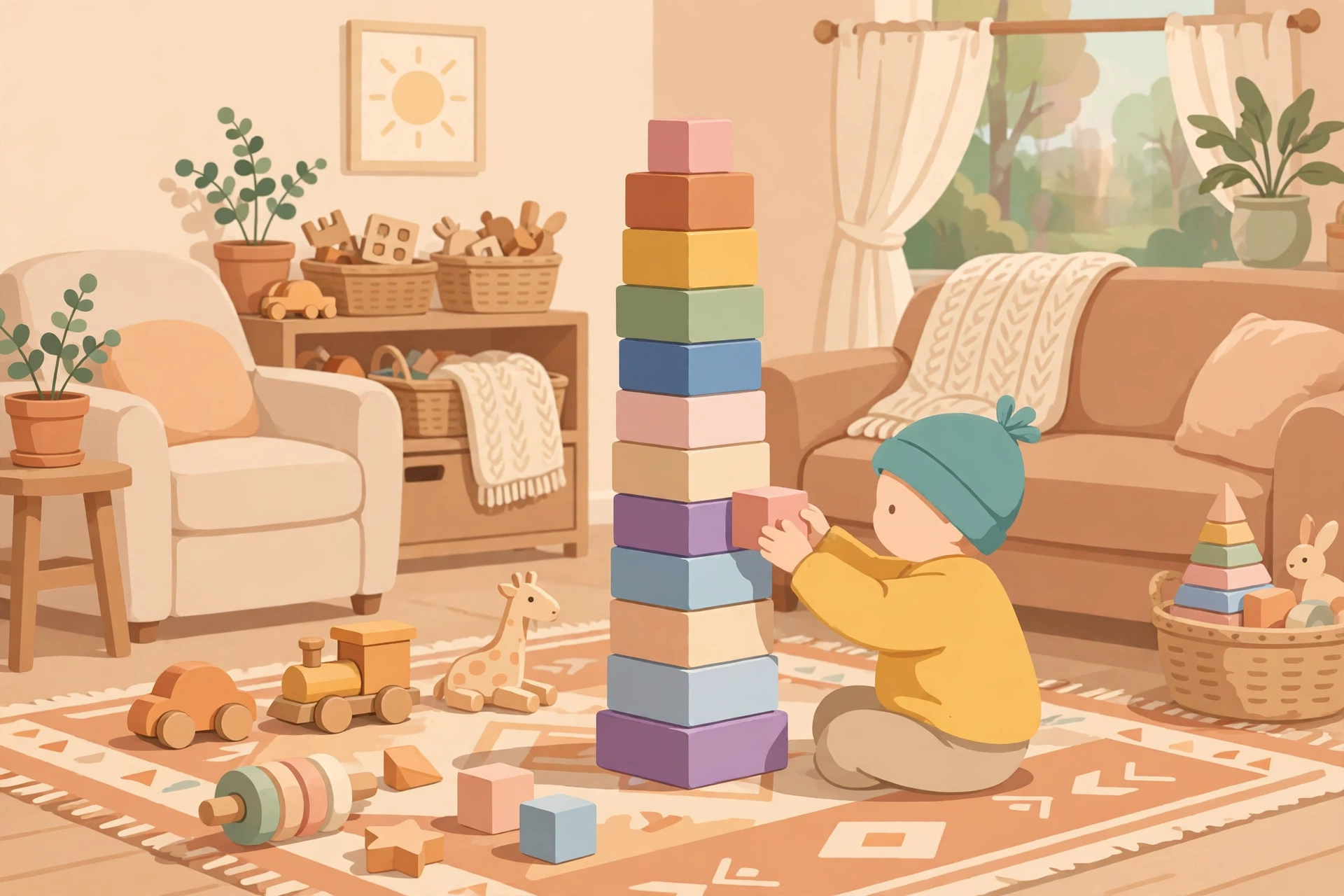
Set out one visible invitation — blocks, dress-up clothes, or books — and let kids choose.
Building and Engineering Play
Build a bridge, zoo, or town from blocks, bricks, or clean boxes. Needs: building toys or cardboard. Ages 3–10. Steps: 1) Set a simple challenge. 2) Plan and build. 3) Photo it before tidy-up.
Pretend Play and Dress-Up
Turn a corner into a shop, restaurant, or space station with simple props. Needs: old clothes, hats, bags, play money. Ages 2–8. Steps: 1) Choose a theme. 2) Gather props in a basket. 3) Join in briefly, then step back.
Reading Nook and Audio Stories
Make a corner with pillows, a blanket, and books, and play an audio story on a speaker. Needs: books, cushions, speaker. Ages 2–12. Steps: 1) Set up the corner. 2) Let each child pick a book. 3) Read or listen quietly.
Quiet Play for Calm-Down Time
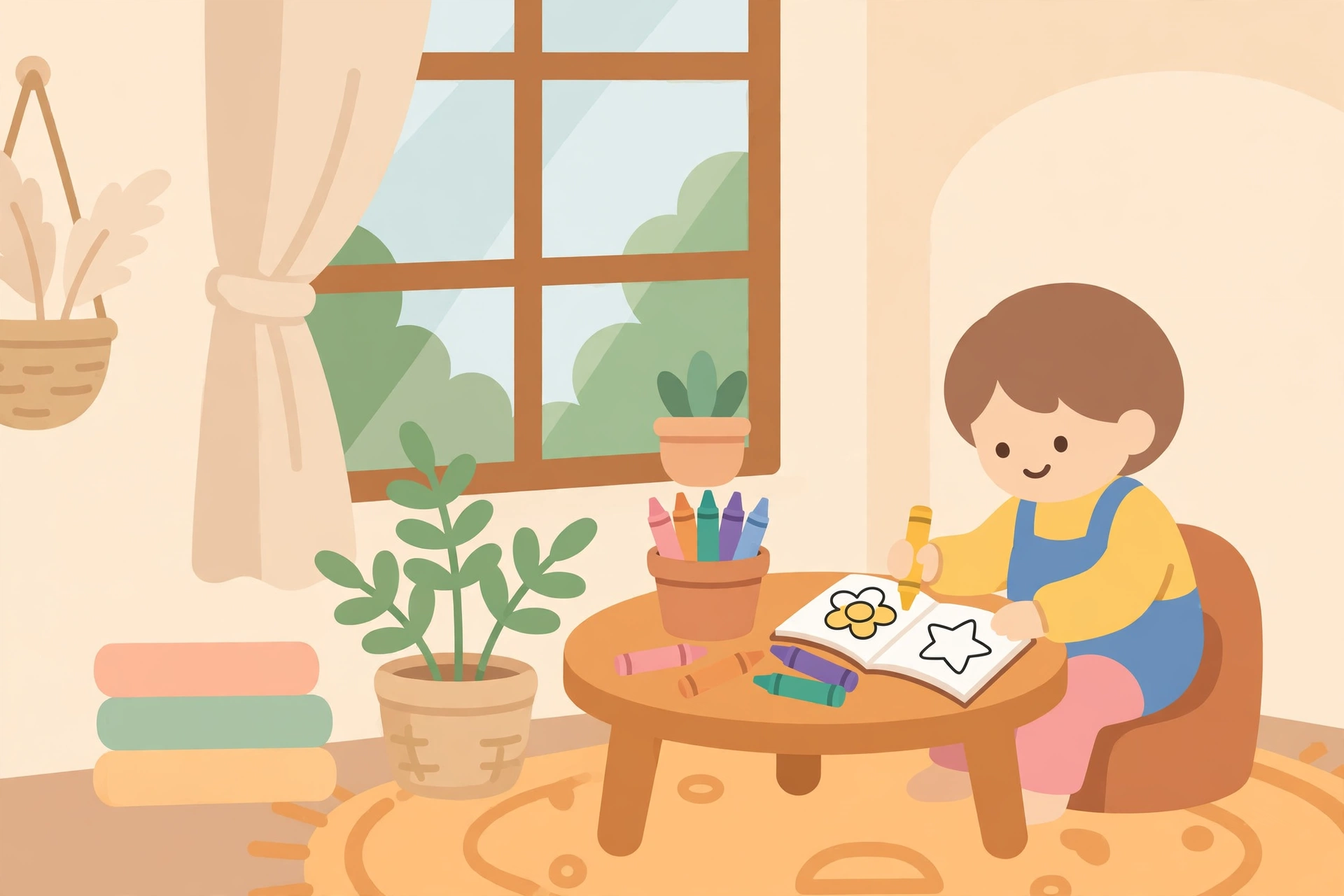
These slower options help children focus and settle after active play.
Coloring and Drawing Station
Keep paper, crayons, pencils, and stickers in one reachable box. Needs: basic art supplies, table. Ages 2–10. Steps: 1) Set out supplies. 2) Offer a prompt, like “draw your dream house.” 3) Display finished work.
Jigsaw Puzzles and Sorting Play
Puzzles, button sorting, and bead threading suit calm, focused play. Needs: puzzle or sorting tray. Ages 3–10. Steps: 1) Pick the right piece count. 2) Work on a tray. 3) Pack away in the same spot.
Listening and Breathing Corner
Create a small corner with cushions, a soft toy, and a picture book for slowing down. Needs: cushions, blanket, books. Ages 2–9. Steps: 1) Choose a low-traffic corner. 2) Add soft textures. 3) Use it for pauses.
Table Activities: Puzzles, Building, and Hands-On Fun
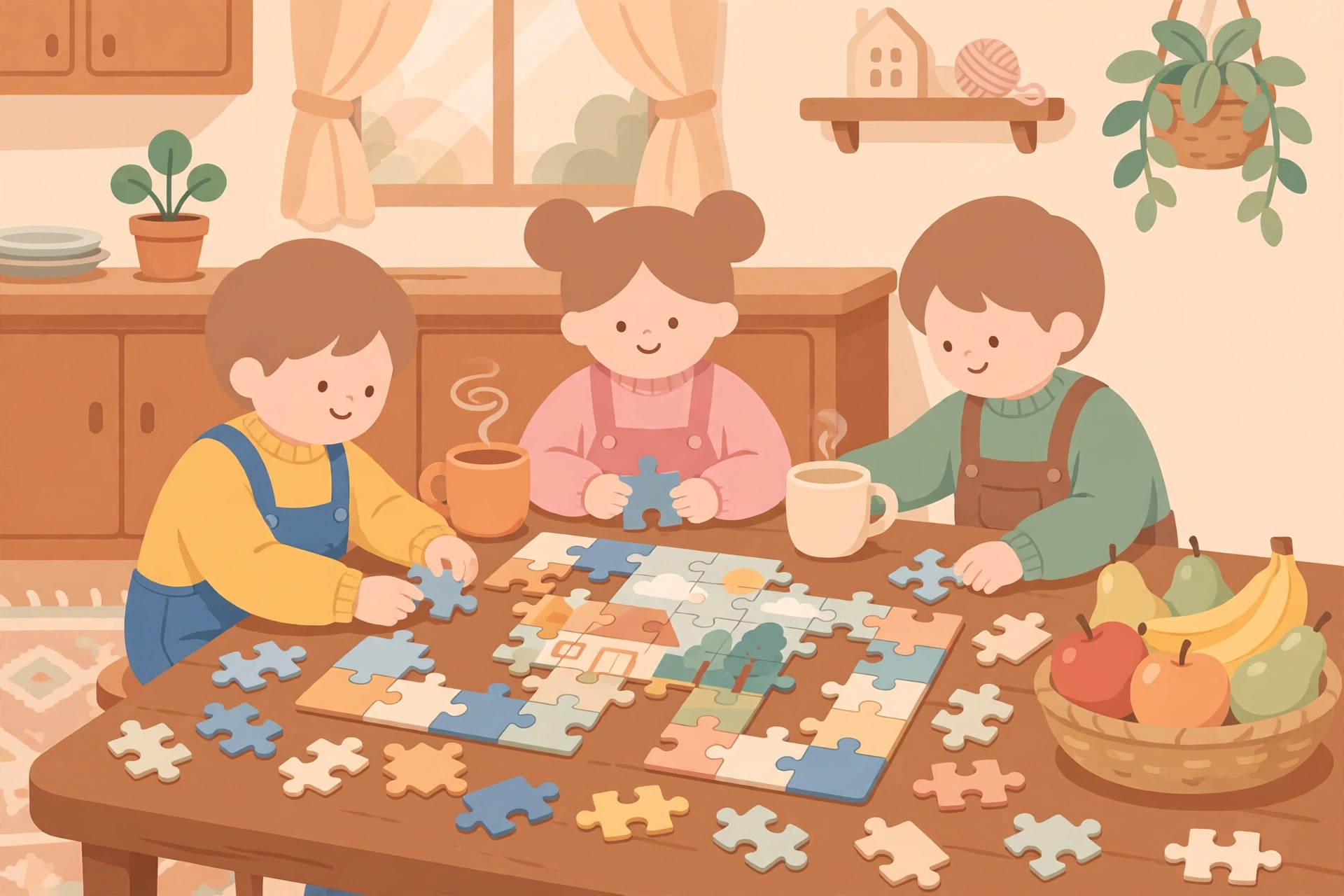
Cover the table, set a clear finish, and keep cleanup supplies nearby.
Building-Brick Challenges
Try the tallest tower, longest bridge, or a vehicle with wheels, against a timer. Needs: building bricks, flat surface. Ages 4–12. Steps: 1) Set the challenge. 2) Build side by side. 3) Test and rebuild.
Board Games and Card Games
Short games teach turn-taking in small doses. Needs: one age-appropriate game. Ages 4–12. Steps: 1) Read rules together. 2) Play a practice round. 3) Keep the first game short.
Clay, Dough, and Modeling
Roll and shape dough into animals, food, and letters. Needs: dough, tray, cookie cutters. Ages 2–9. Steps: 1) Cover the table. 2) Offer cutters and rolling pins. 3) Store dough sealed.
Creative Projects to Make at Home
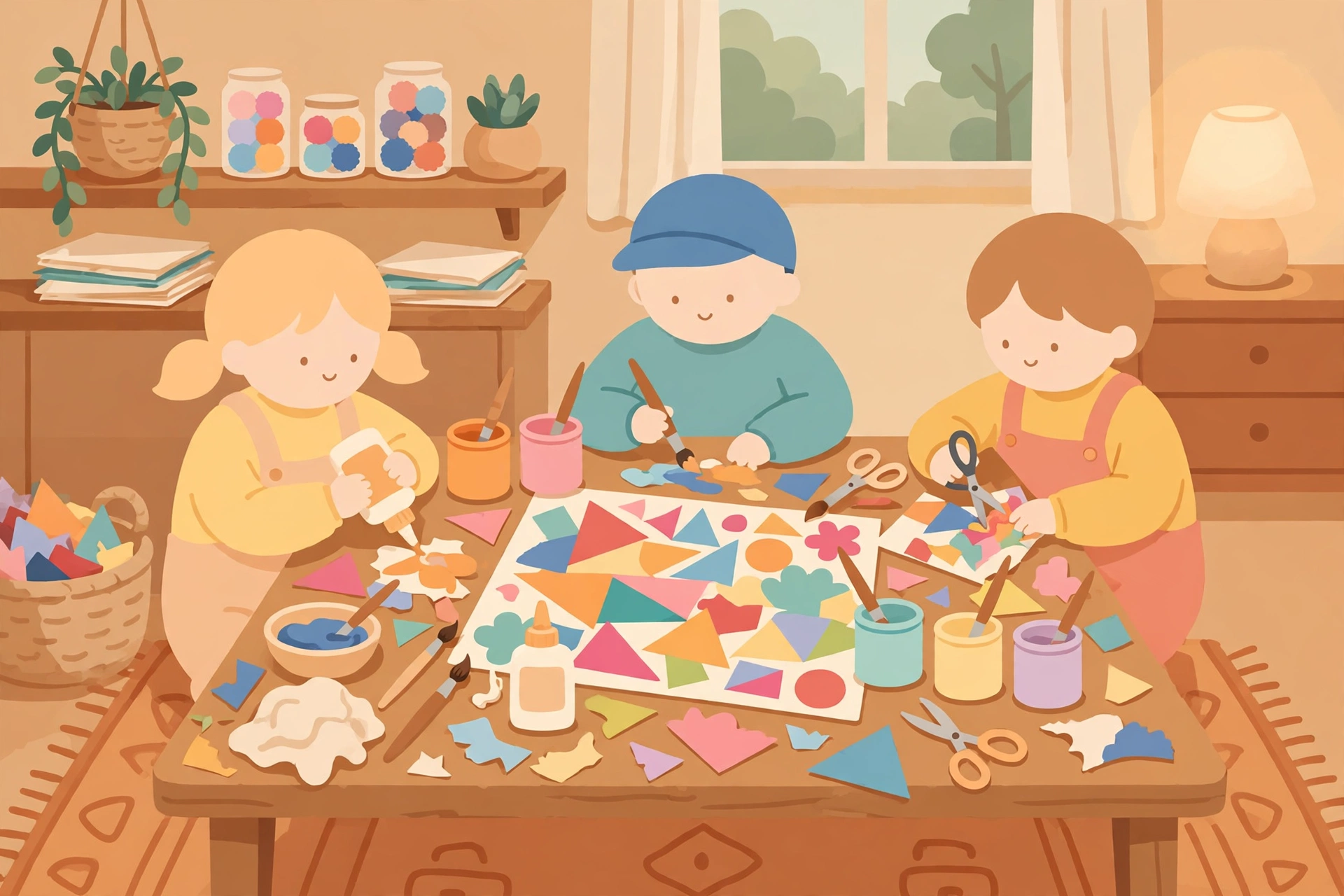
Keep projects open-ended: a prompt plus a tray of supplies beats a fixed model.
Cardboard Box Creations
Turn large boxes into cars, castles, or rockets with tape and paint. Needs: boxes, tape, markers; adults handle scissors. Ages 3–10. Steps: 1) Choose what to build. 2) Tape and decorate. 3) Play with the result.
Collage and Mixed-Media Art
Tear and glue paper, fabric scraps, and magazine pictures into layered pictures. Needs: glue, paper, collage materials; adults handle scissors. Ages 3–12. Steps: 1) Gather materials. 2) Choose a theme or go free-form. 3) Dry flat.
Homemade Instruments and Puppet Show
Make shakers, drums, and sock puppets, then put on a show. Needs: socks, jars, tape, decorating supplies. Ages 4–10. Steps: 1) Make one instrument and puppet each. 2) Practice a short story. 3) Perform for family.
Free Things to Do Inside With What You Already Have
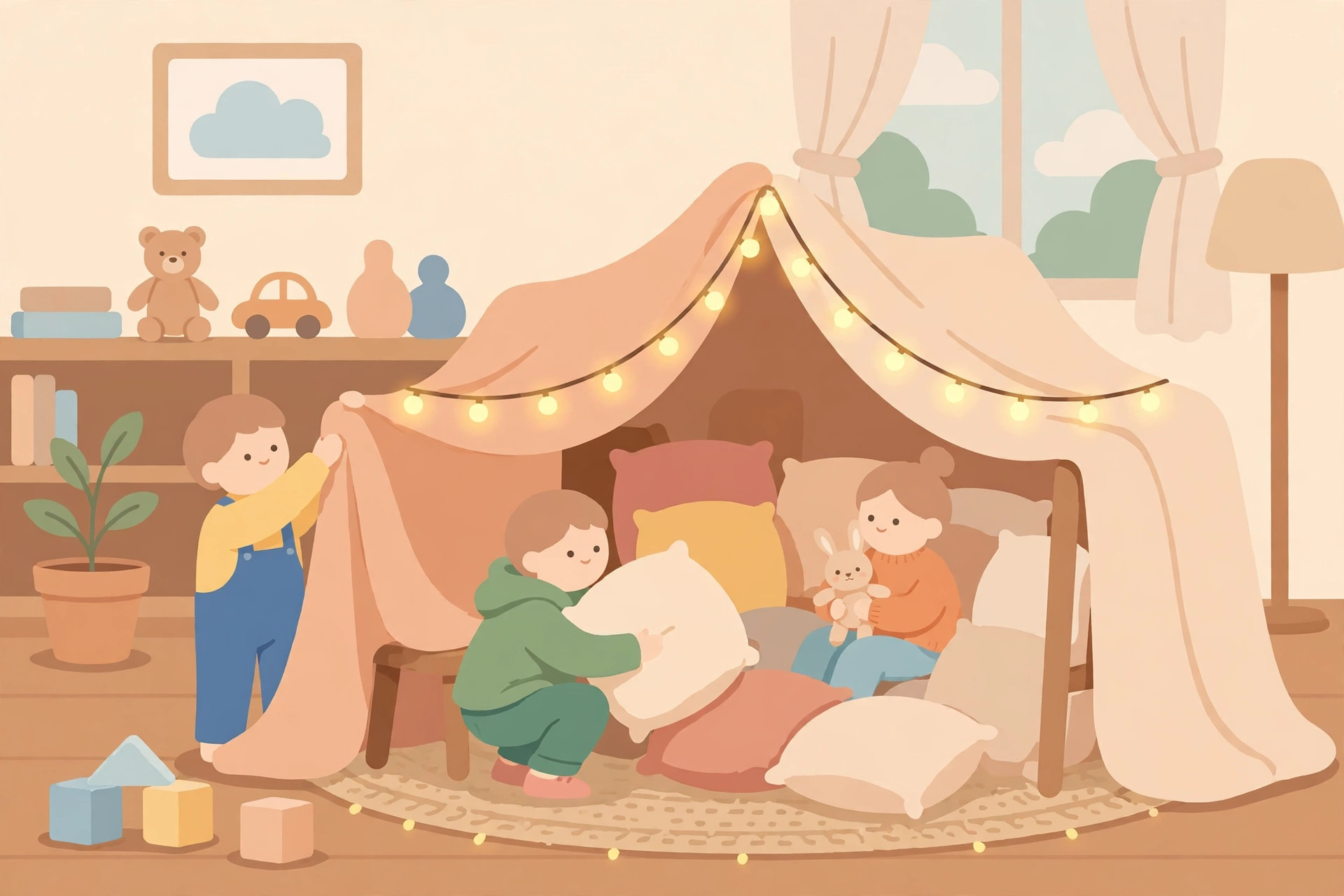
Change the setup and the same toys feel new — in a fort, a shop, or a new room.
- Build a blanket fort with chairs, sheets, and pillows.
- Run a library: sort books, make cards, and “check out” stories.
- Hold a fashion show with dress-up clothes and a tape runway.
- Make a treasure map and hide a toy to find.
- Create a restaurant menu and serve snack time in character.
- Build and pour with dry pasta and measuring cups.
- Put on a shadow show with a lamp and blank wall.
- Start a joke book with one new joke a day.
Rotate a few toys away and back every week or two — absence makes them feel new.
Active Play and Movement When You Can’t Go Outside
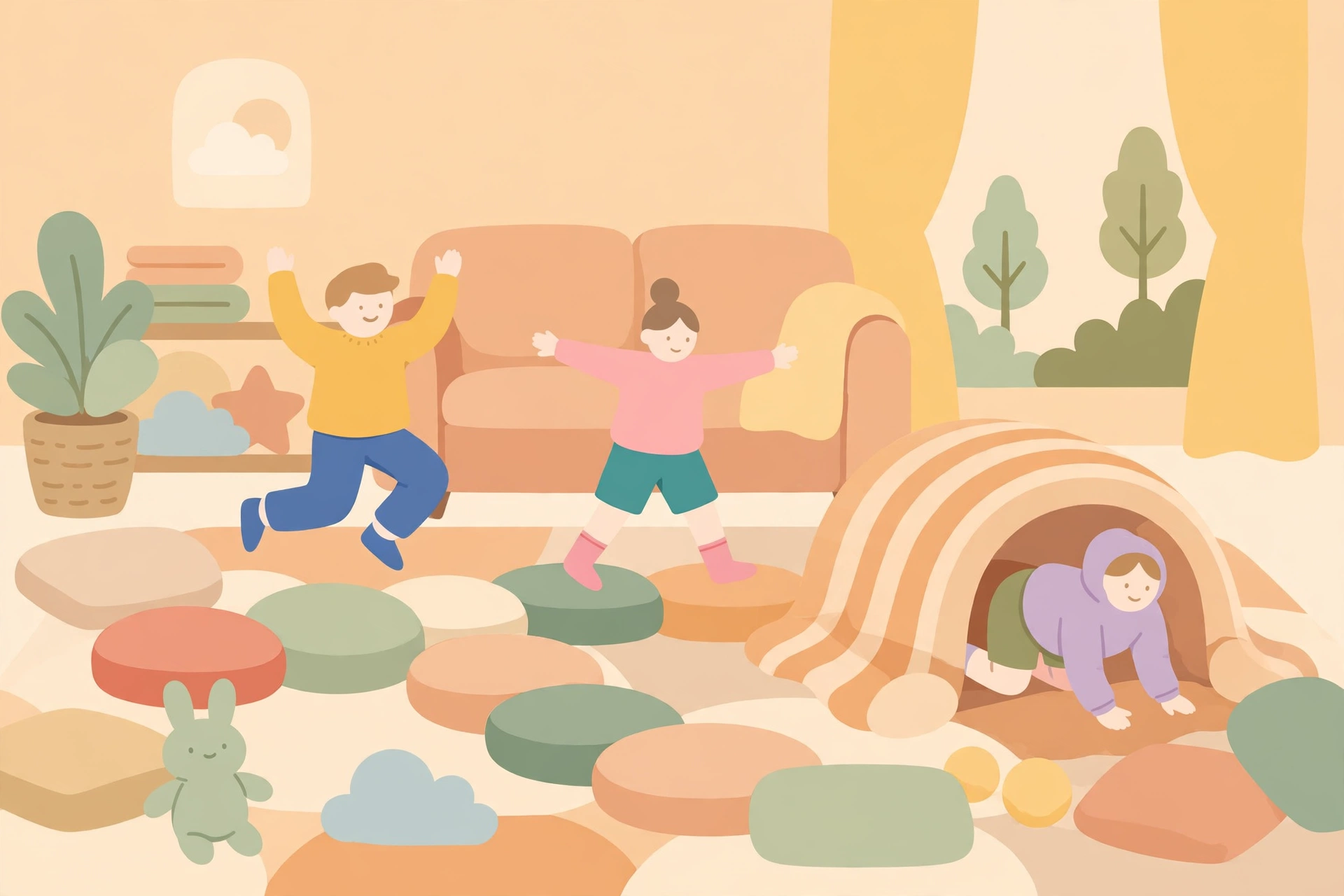
Use short bursts: clear a safe space, use soft equipment, and agree on rules first.
Living-Room Movement Circuit
Move through stations for hopping, balancing, crawling, and tossing. Needs: cushions, tape lines, soft ball. Ages 3–9. Steps: 1) Set four stations in a loop. 2) Spend one minute at each. 3) Repeat twice.
Dance Party and Movement Dice
Roll a die to pick the next move — jump, spin, march, freeze — then dance. Needs: music, die or movement cards. Ages 2–10. Steps: 1) Write moves on cards. 2) Draw one between songs. 3) Invent new moves.
Sock Toss and Target Games
Toss rolled socks into baskets or taped squares, scoring harder targets higher. Needs: socks, baskets, tape. Ages 3–10. Steps: 1) Set targets at varied distances. 2) Agree on points. 3) Keep score together.
Ideas by Age: Toddlers Through Tweens
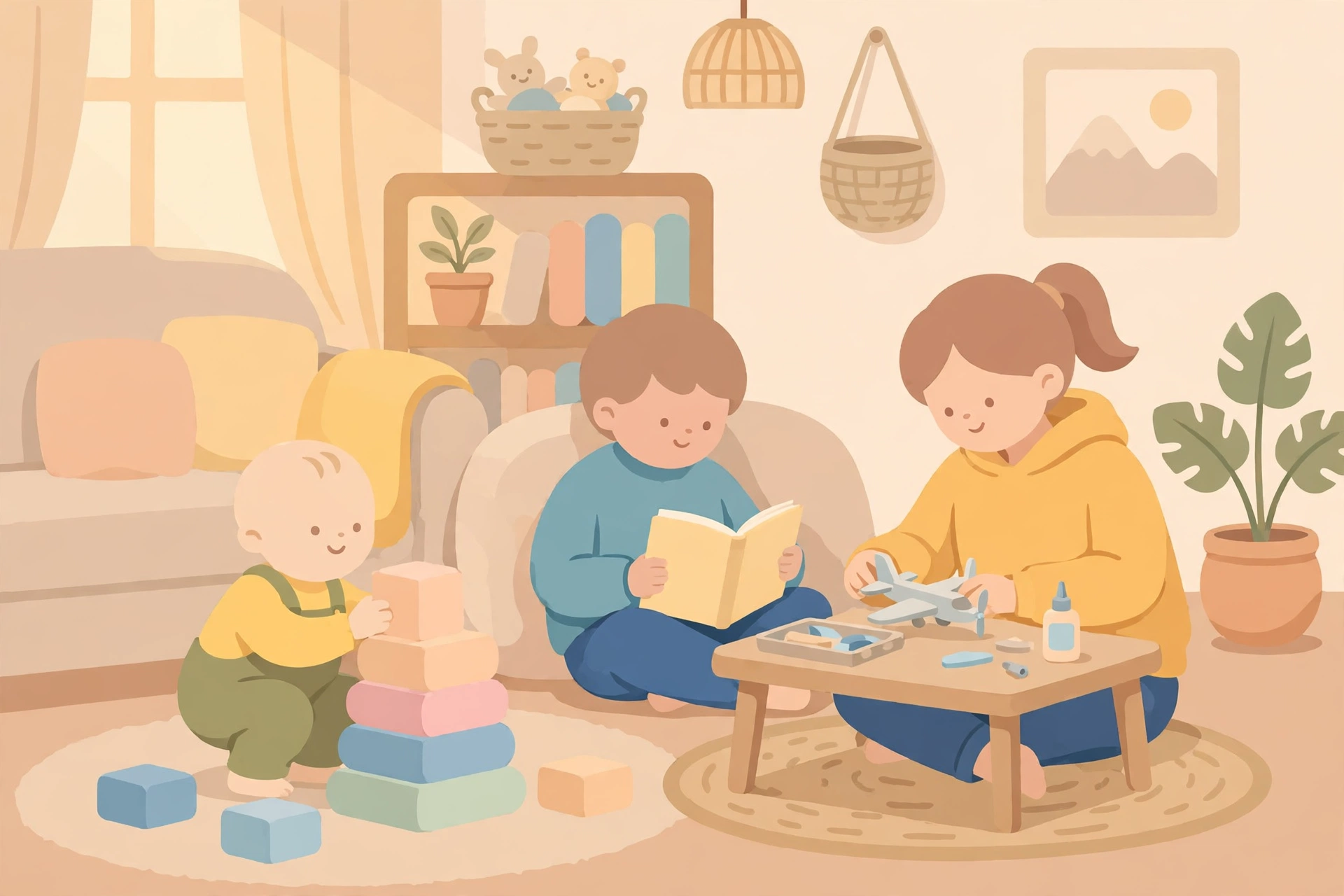
Age bands are a guide, not a rule. Simplify for younger players; add timers or scoring for older ones.
Toddlers, Ages 2–3
Keep it sensory and simple: stacking cups, nesting boxes, shallow-tray water play, peekaboo, and dancing. Use large, sturdy pieces, keep sessions short, and offer two choices at a time.
Ages 4–6
Try scavenger hunts, simple board games, dress-up, dough play, and building challenges. Add a theme — pirate hunt, bakery, rescue mission — and keep rules to two or three steps.
Ages 7–9
Add strategy and making: card games, trivia, paper airplanes, puppet shows, and sink-or-float sorting with household objects. Let kids help plan and teach a game to a younger sibling.
Ages 10–12
Offer bigger projects: designing a board game, planning a family quiz, building complex models, or running a mini tournament. Give real responsibility for planning, scoring, and hosting.
Boredom Busters for “There’s Nothing to Do”
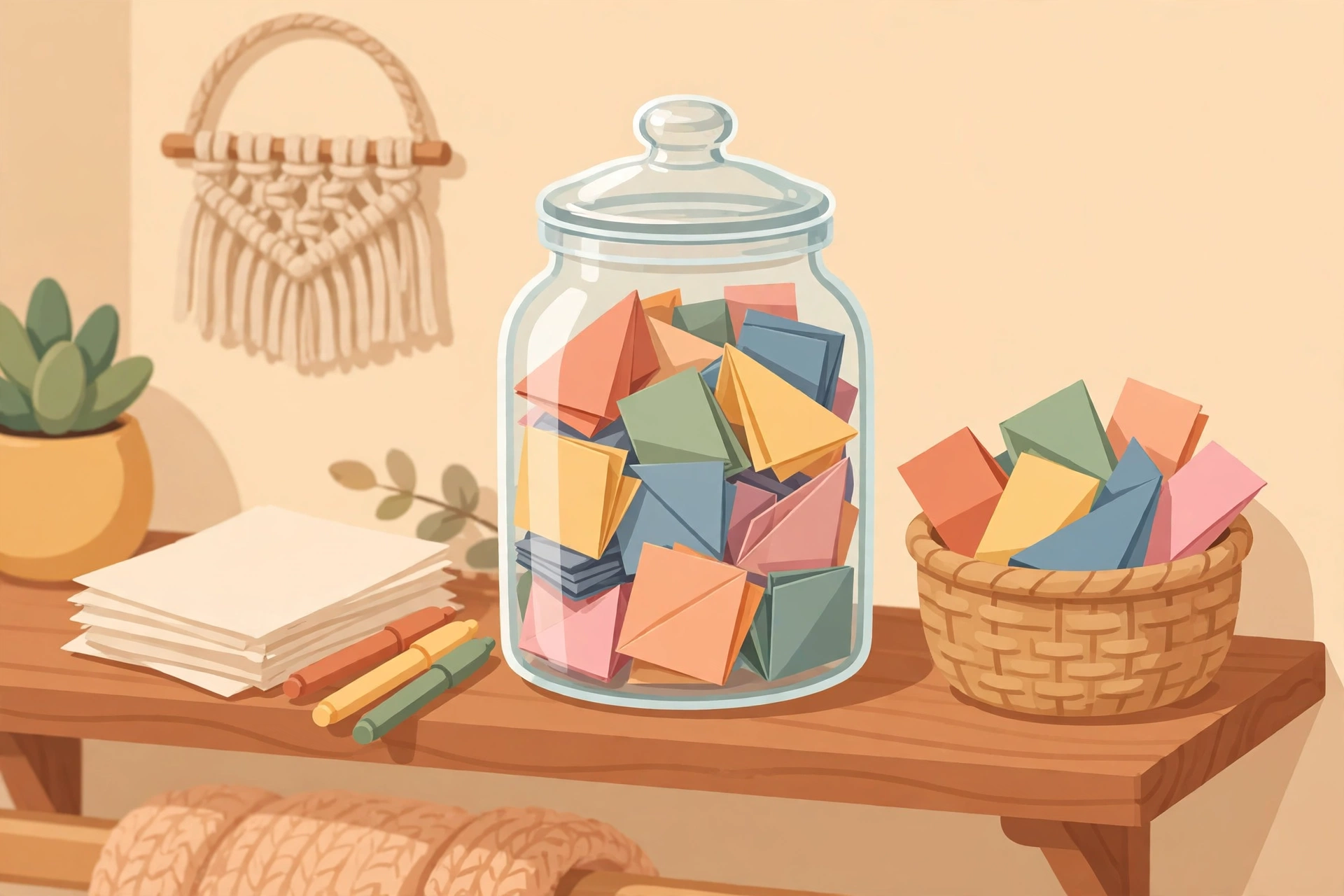
Sit down for five minutes, offer two choices, and help them begin — most keep going once started.
Try a boredom jar with 20–30 slips from this guide, or a choice board — move, make, read, build. Low energy? Start calm. High energy? Start with movement, then settle.
A Simple Supply Kit and Quick Planning Checklist
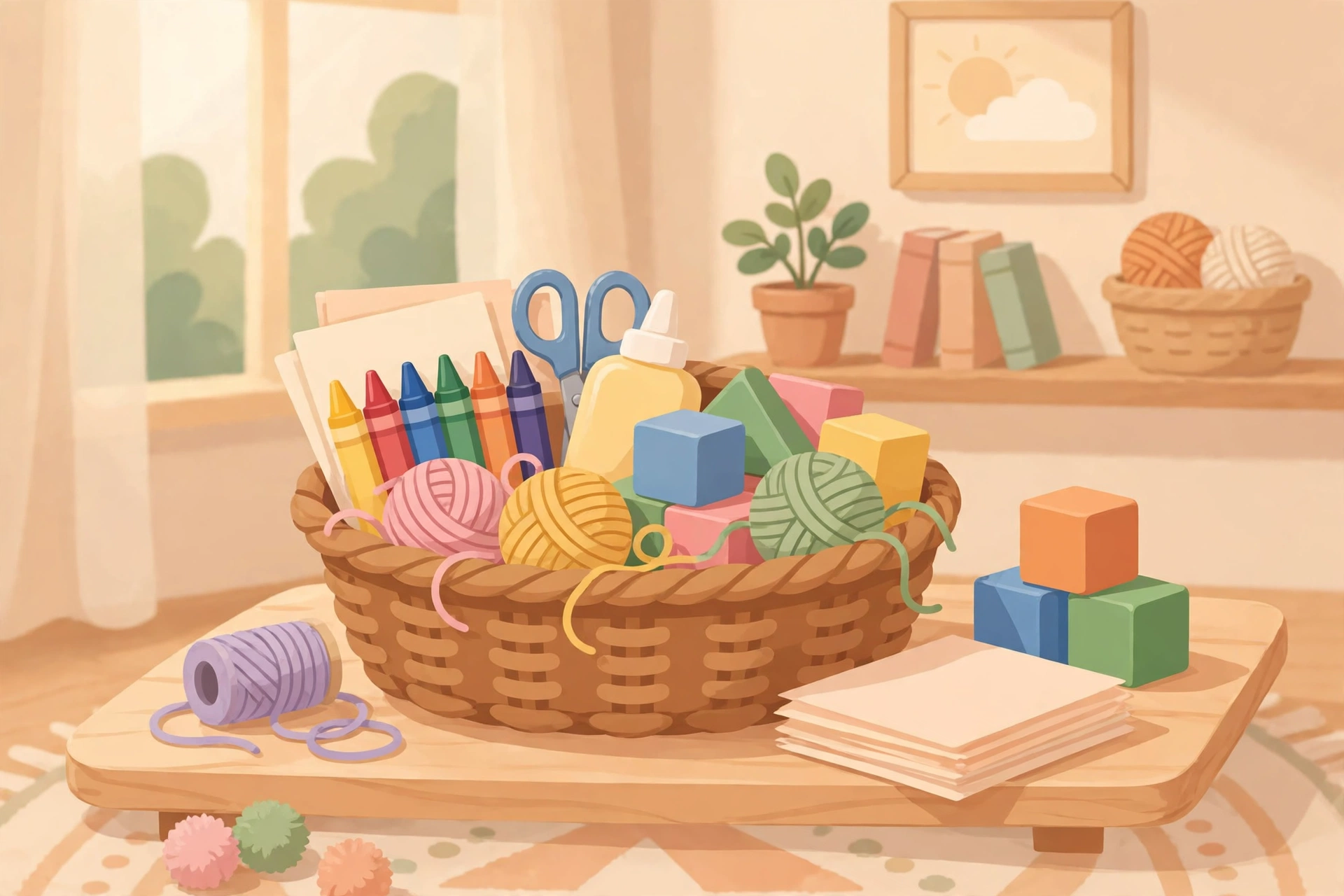
Keep one basket ready so starting takes minutes; restock weekly.
Supply kit: paper, crayons and markers, tape, child-safe scissors, glue stick, paper plates and cups, string, building bricks, cards, puzzle, dice, beach ball, dress-up clothes, blanket for forts.
Quick checklist: 1) Pick one active, one calm, and one creative idea. 2) Set out supplies first. 3) Agree on play area and tidy-up time. 4) Let kids choose the order. 5) End with a tidy-up timer.
Frequently Asked Questions About Indoor Activities for Kids
Short answers to the questions parents ask most.
How to keep kids entertained indoors?
Rotate short blocks — move, make, read, build — and let kids choose the order. Set out supplies early and change the setup often.
What are 10 fun indoor games for kids?
Scavenger hunt, charades, freeze dance, hide-and-seek, Simon Says, I Spy, card matching, Pictionary, balloon keep-up, and story chain. All ten are explained with steps in the first section.
What are 5 indoor activities?
Build a blanket fort, run a scavenger hunt, start an art project, work on a puzzle, and finish with a dance party. Those five cover building, searching, making, focus, and movement.
What are 10 fun activities I can do at home?
Build a fort, put on a puppet show, make collage art, complete a puzzle, hold a dance party, run a scavenger hunt, set up a reading nook, play dress-up, try a board game, and build an obstacle course.
What to do when your child is bored at home?
Offer two choices and help them start for five minutes. A boredom jar or choice board gives a quick next step.
What are 20 indoor games?
I Spy, Twenty Questions, bingo, dominoes, building challenge, hot potato, hide the thimble, alphabet hunt, Would You Rather, memory tray, follow the leader, indoor bowling, paper airplanes, guess the sound, dress-up relay, word ladder, card sorting, shadow puppets, slow-motion tag, and talent show.
What are some fun games I can play inside with my family?
Cooperative puzzles, trivia, living-room bowling, charades, and bingo. Form mixed-age teams and keep scores light.
What are 30 fun and easy indoor party games for kids?
Pick from six groups of five: active, guessing and acting, creative, table and team, calm cool-down, and quick fillers. The party section lists all 30 — rotate every 10 minutes.
What are 10 examples of indoor activities?
Drawing, puzzles, building, reading, cooking together, dancing, hide-and-seek, dress-up, board games, and clay.
What are 100 fun things I can do at home?
Think in combinations: vary theme, players, time, materials, and rules across 10 base ideas — fort, hunt, art, puzzle, dance, dress-up, board game, building, puppet show, cooking — to pass 100.
What can kids play indoor?
Guessing, board, and card games; building, pretend play, art, and puzzles; and movement games like freeze dance. Match to age and energy.
Pingback: Holiday Activities for Kids: Every Holiday in One Place
Pingback: New Years Activities for Kids: Crafts, Games & Countdown