
Earth Day Activities for Kids: Crafts, Nature & Recycling
Earth Day activities for kids work best when children can touch, plant, sort, and explore. This guide gathers nature play, recycling crafts, planting, games, school ideas, toddler play, cleanups, and ways to save water and energy at home for ages 2–12.
What to Do for Earth Day: Ideas for Home and School
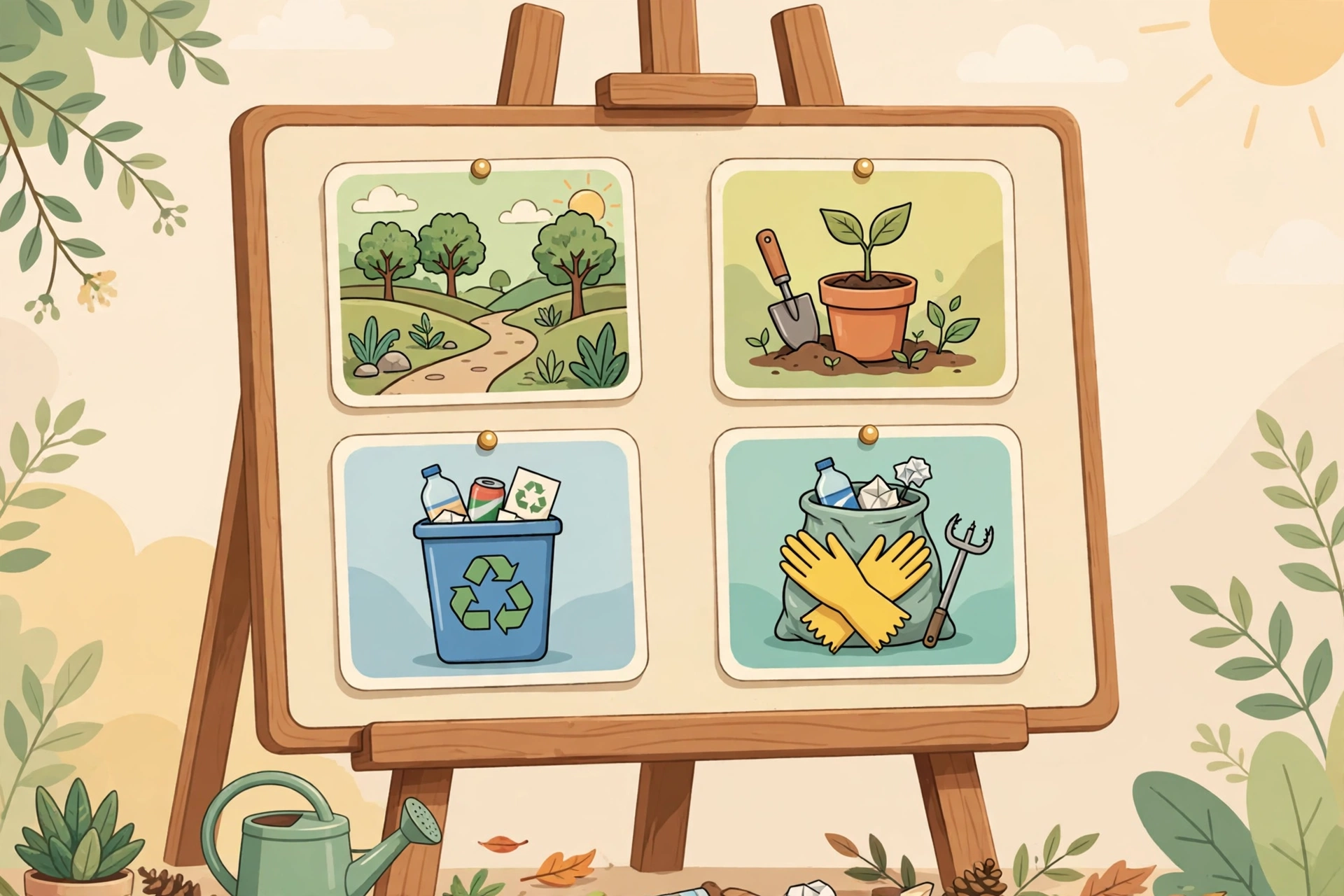
Pick a few ideas, mix indoor and outdoor play, and let children choose. At home, try nature walks, planting, and crafts from reused materials. At school, try recycling stations, posters, and a yard cleanup.
Five-Things Earth Day Plan
Pick five simple actions for the day and check them off as you finish each one.
You need: Paper, pen, pencil for checking off items. Ages: 4–12.
- Choose five actions, such as a walk, planting, a craft, a cleanup, and saving water.
- Write the list where everyone can see it and check off each action.
Earth Day Choice Board
Make a board with picture cards for each idea, and let children pick what to do first.
You need: Cardboard, paper, markers, tape. Ages: 4–9.
- Draw one picture card for each idea and tape them to the board.
- Let each child point to a card and start there.
Family Pledge Poster
Draw and write three promises your family will keep, such as turning off lights.
You need: Large paper, markers, tape. Ages: 4–12.
- Talk together about three promises everyone can keep.
- Write and draw each promise, then hang the poster where all can see it.
Nature Activities for Earth Day

Nature play starts with looking closely. Slow down, stay on paths, and let children lead the noticing. Bring a basket for fallen leaves and a notebook for drawings.
Leaf and Bark Rubbings
Place paper over leaves or bark and rub with crayons to reveal patterns.
You need: Paper, crayons, fallen leaves. Ages: 4–9.
- Place a fallen leaf under paper and rub gently with a crayon side.
- Try bark, then compare the patterns side by side.
Bird-Watching Sit Spot
Sit quietly in one spot, watch and listen for birds, and draw what you notice.
You need: Blanket, notebook, pencils. Ages: 5–12.
- Choose a quiet spot and sit still for a few minutes.
- Draw or write what you notice, then share drawings together.
Nature Color Hunt
Search the yard or a park path for something green, brown, yellow, white, and gray.
You need: Color list on paper, pencil, bag for fallen items. Ages: 4–8.
- Write a list of five colors to find.
- Walk with an adult, check off each color, and gather only fallen items.
Recycling Crafts From Materials at Home
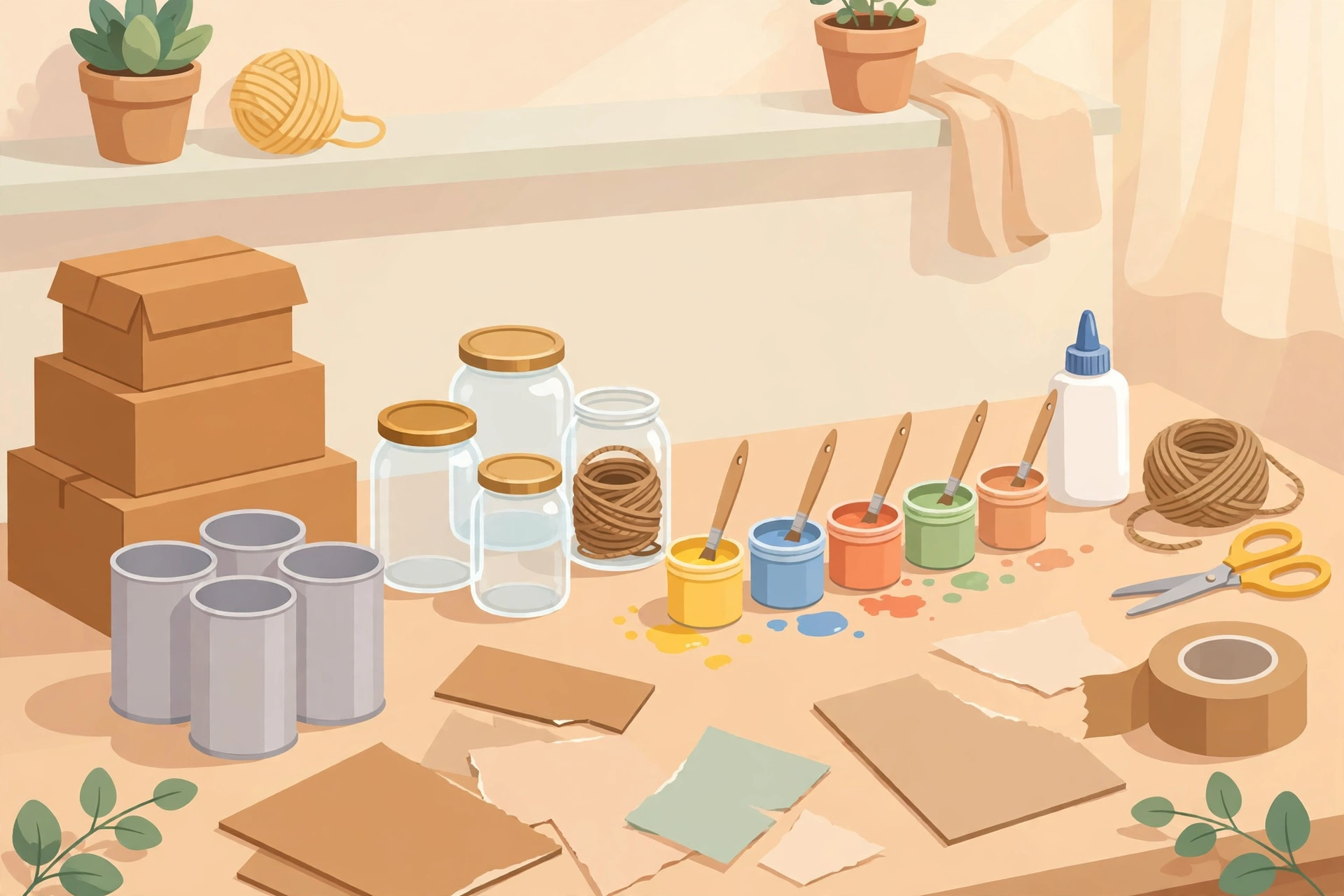
Save clean cans, boxes, jars, and paper for a week, then turn them into useful crafts. Adults should check all materials first and handle any sharp edges.
Tin Can Planters
Decorate clean cans and use them as small planters for seeds or cuttings.
You need: Clean cans, paint or paper, glue, soil, seeds. Ages: 5–12, with an adult checking can edges.
- An adult checks each can for sharp edges; children paint or wrap the cans.
- Fill with soil, plant seeds, and water gently.
Cardboard Bird Feeder
Decorate a cardboard tube or small box and fill it with birdseed.
You need: Cardboard tube or small box, string, birdseed, tray. Ages: 4–9.
- Decorate the tube or box and tie string through the top.
- Fill with birdseed and hang it where birds can visit.
Junk-Model Creations
Build vehicles, animals, or houses from clean packaging, boxes, and tubes.
You need: Clean boxes and tubes, tape, glue, markers, scissors for adult use. Ages: 4–10.
- Sort saved materials, choose a model, and tape pieces together.
- Add paper details, name the creation, and display it.
Planting and Gardening With Kids
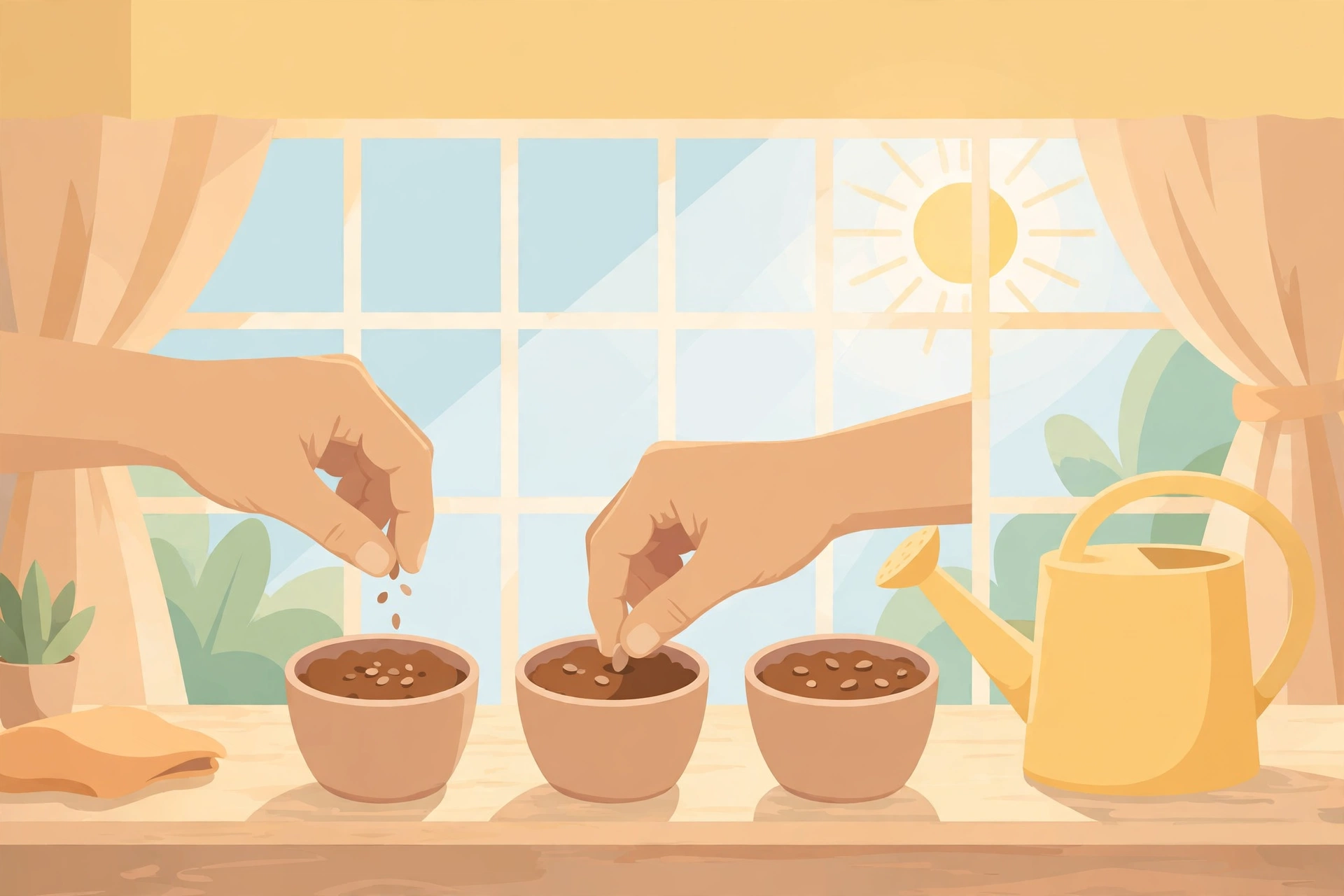
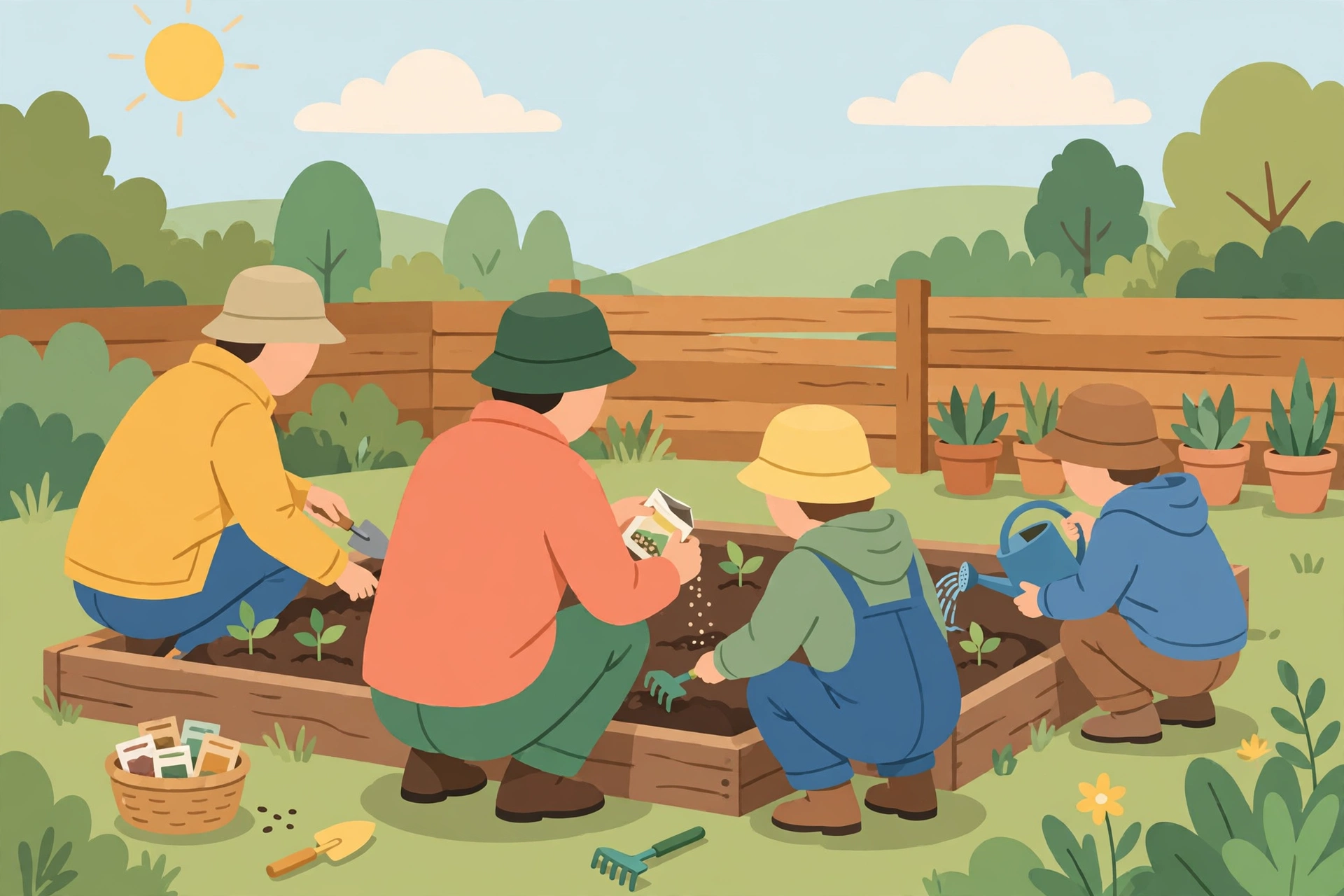
Start with forgiving plants in cups or a small box, water on a simple routine, and check growth daily. Keep tools child-sized and let children do the planting themselves.
Plant Seeds in Cups
Fill cups with soil, plant seeds, water them, and watch for sprouts.
You need: Cups, soil, seeds, water, tray, sunny spot. Ages: 3–9.
- Fill cups with soil, drop in seeds, cover lightly, and water gently.
- Place cups on a tray in a sunny spot and check daily.
Herb Garden in a Box
Plant herbs in a box or large planter and tend them with a daily watering routine.
You need: Box or planter, soil, herb plants or seeds, watering can, labels. Ages: 5–12.
- Fill the box with soil, plant each herb in a row, and label every row.
- Water daily and snip leaves only with adult help.
Compost Jar Observation
Layer soil and plant scraps in a clear jar and watch the layers change over days.
You need: Clear jar with lid, soil, plant scraps, water spray. Ages: 6–12, with adult help.
- Layer soil and small plant scraps, spray lightly, and close the lid.
- Check the jar daily and draw what changes.
Earth Day Games That Teach as Kids Play
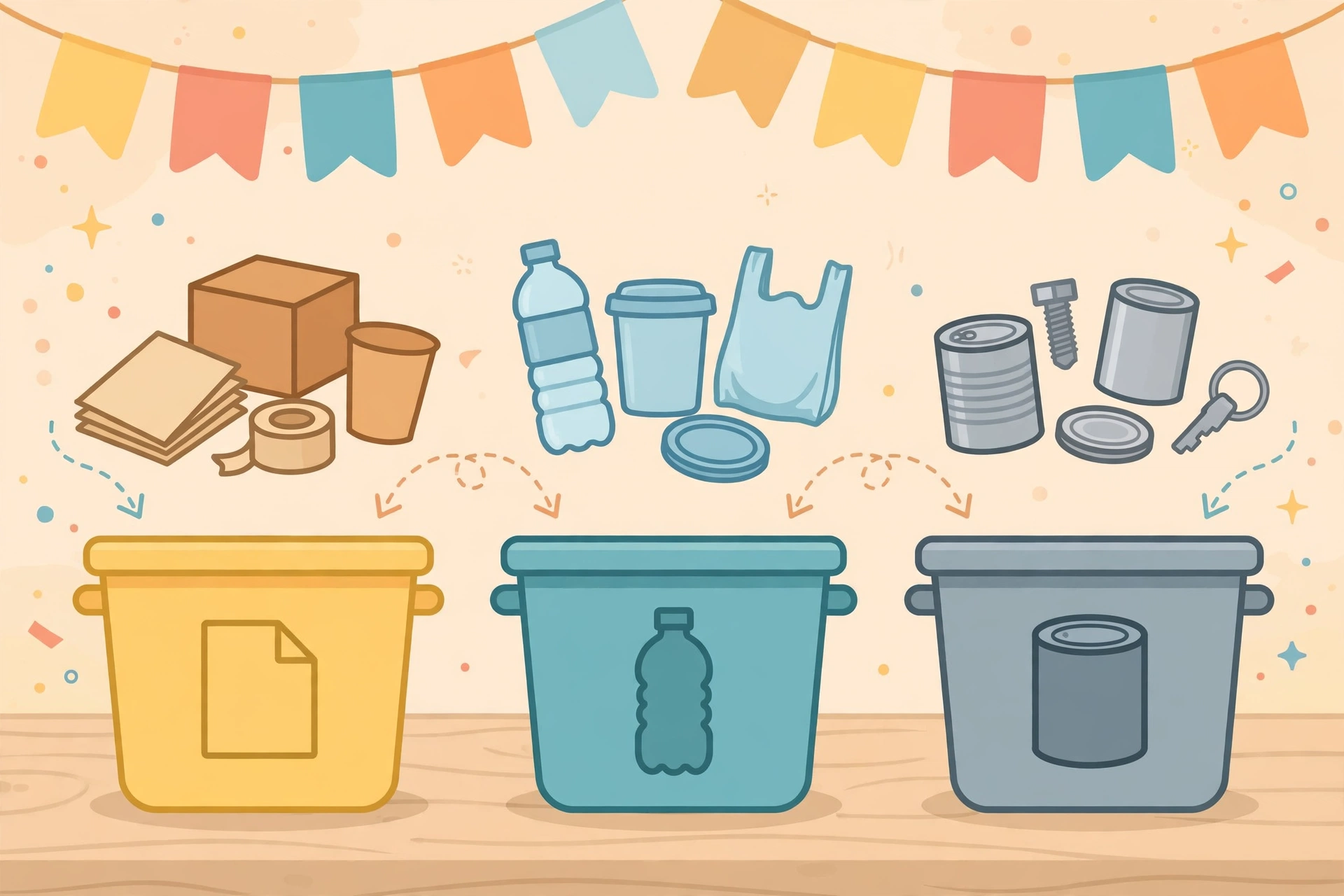
Games turn sorting, matching, and hunting into play. Keep rounds short and let children take turns leading. If rain keeps you inside, try our rainy day activities for kids for more indoor ideas.
Recycling Sorting Race
Sort clean items into labeled bins, following your family’s recycling rules.
You need: Clean paper, plastic, and metal items, labeled bins, timer. Ages: 5–12.
- Label bins for paper, plastic, metal, and trash.
- Sort every item against the timer, then check the bins together.
Earth Bingo
Play bingo with picture cards showing leaves, bins, flowers, water drops, and the sun.
You need: Bingo cards, picture tokens, markers, bag. Ages: 4–9.
- Hand out cards and markers, then draw tokens from a bag.
- Mark matching squares until someone fills a row.
Three R’s Memory Match
Match pairs of cards showing reuse and recycling ideas.
You need: Paper cards, markers. Ages: 4–8.
- Draw matching pairs of cards with simple pictures.
- Mix cards face down, flip two per turn, and keep matches.
Earth Day at School: Classroom Ideas
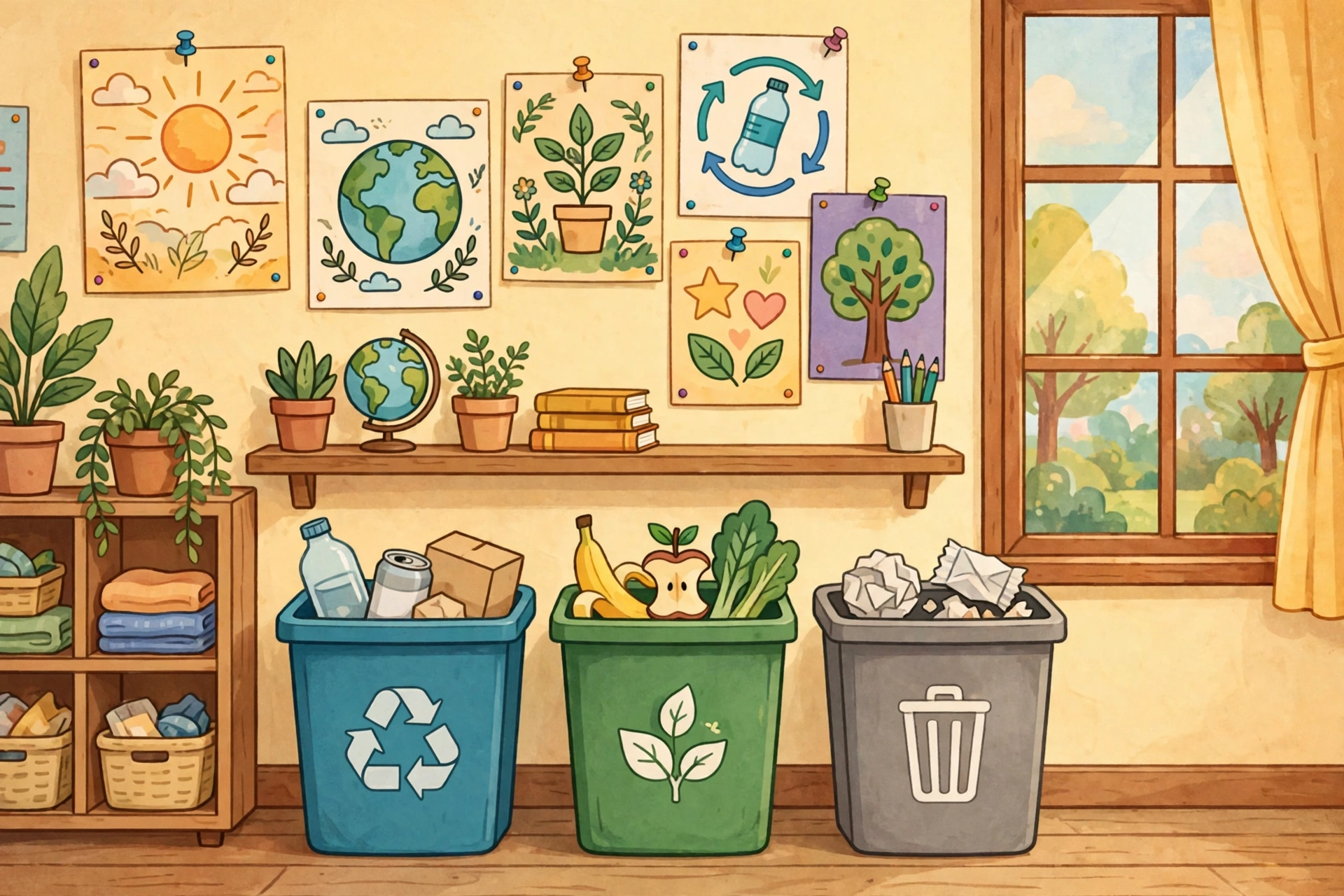
School plans work best when every class has a clear job. Set up stations, assign small teams, and keep projects short enough to finish in one lesson.
Classroom Recycling Station
Set up labeled bins for paper, plastic, and trash, with student helpers checking them daily.
You need: Bins, labels, markers, tape. Ages: 5–12.
- Label one bin for each type of material and place them within reach.
- Assign helpers to check the bins and report problems.
Earth Day Poster Project
Design posters that show one promise, such as saving water or turning off lights.
You need: Paper, markers, crayons, tape. Ages: 5–12.
- Choose one promise and draw a large picture with a short caption.
- Display posters in the hallway for other classes to see.
Schoolyard Cleanup and Planting
Tidy the schoolyard in small teams, then plant flowers or seeds in a shared bed.
You need: Gloves, bags, small tools, plants or seeds, water. Ages: 6–12, with adult supervision.
- Split into teams, collect litter from assigned areas, and skip sharp items.
- Plant flowers or seeds, water them, and wash hands.
Earth Day Ideas for Toddlers
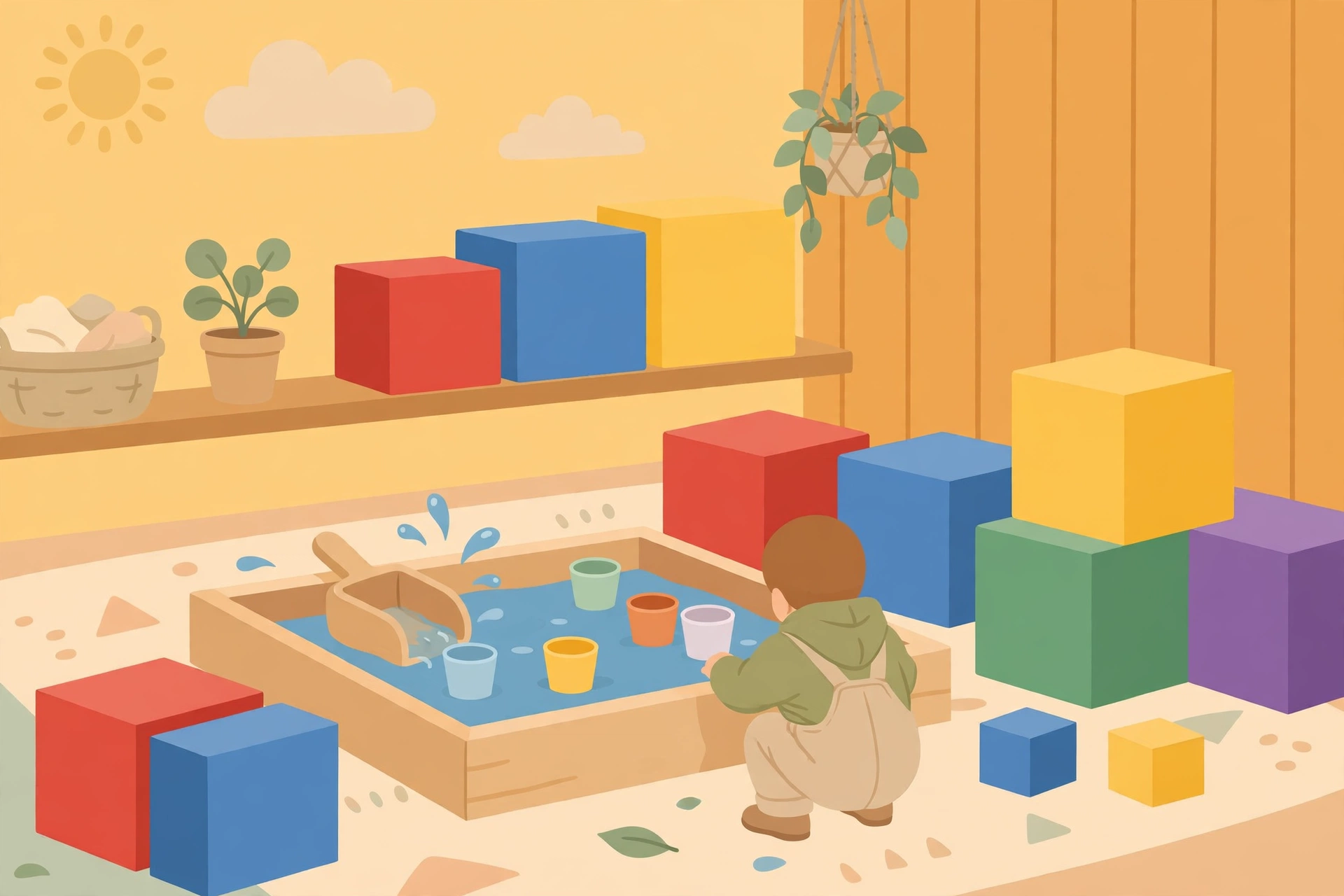
Toddlers do best with short, hands-on play and plenty of repetition. Offer one choice at a time, use large pieces, and stay nearby. For more simple indoor play, see our guide to indoor activities for kids.
Water Play With Cups
Scoop and pour water with cups and spoons in a shallow tray, with an adult nearby.
You need: Shallow tray, cups, spoons, towel. Ages: 2–3, with an adult nearby.
- Set the tray on a towel, add a little water, and show scooping and pouring.
- Stay close, then dry hands and pack away.
Leaf Collage With Large Pieces
Glue large leaves and paper shapes onto a big sheet to make a simple collage.
You need: Large paper, glue stick, large leaves, paper shapes. Ages: 2–3, with an adult nearby.
- Lay out large leaves and paper shapes on the table.
- Let the toddler press pieces onto glue, then hang the collage up.
Sorting Big Items by Color
Sort large blocks, balls, or toys into bins by color, naming each color aloud.
You need: Large blocks or balls, colored bins or boxes. Ages: 2–3.
- Place one bin for each color on the floor.
- Name each color aloud as items go into matching bins.
Outdoor Exploration: Walks, Hunts, and Nature Journals
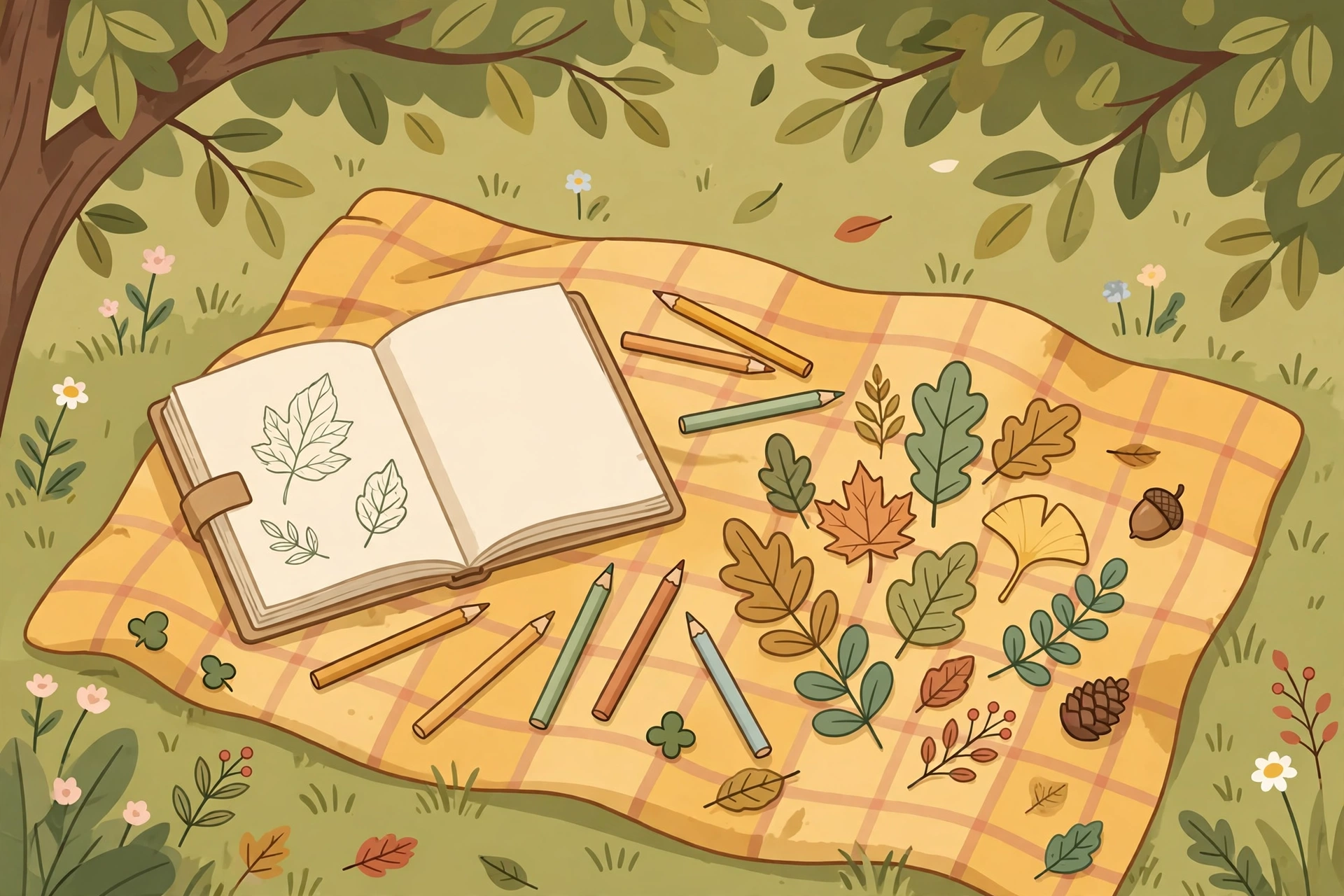
Outdoor exploration needs little more than a notebook, pencils, and a familiar route. Stay on paths, walk with an adult, and take only fallen items.
Nature Journal Walk
Carry a notebook on a walk and draw one thing you notice at each stop.
You need: Notebook, pencils, bag. Ages: 5–12.
- Choose a familiar route and plan three or four stops.
- At each stop, draw or write one thing noticed, then share pages at home.
Scavenger Hunt in the Yard or Park
Hunt for a leaf, a rock, a flower, a feather, and something smooth, staying on paths.
You need: Hunt list, pencil, bag. Ages: 4–10.
- Write a list of five to eight things to find.
- Walk with an adult, check off each find, and gather only fallen items.
Cloud and Weather Watch
Lie on a blanket, watch clouds drift, and describe the shapes you see together.
You need: Blanket, notebook, pencils. Ages: 4–9.
- Spread a blanket in an open, safe spot.
- Watch the clouds, name shapes, and draw a favorite.
The Three R’s: Reduce, Reuse, Recycle
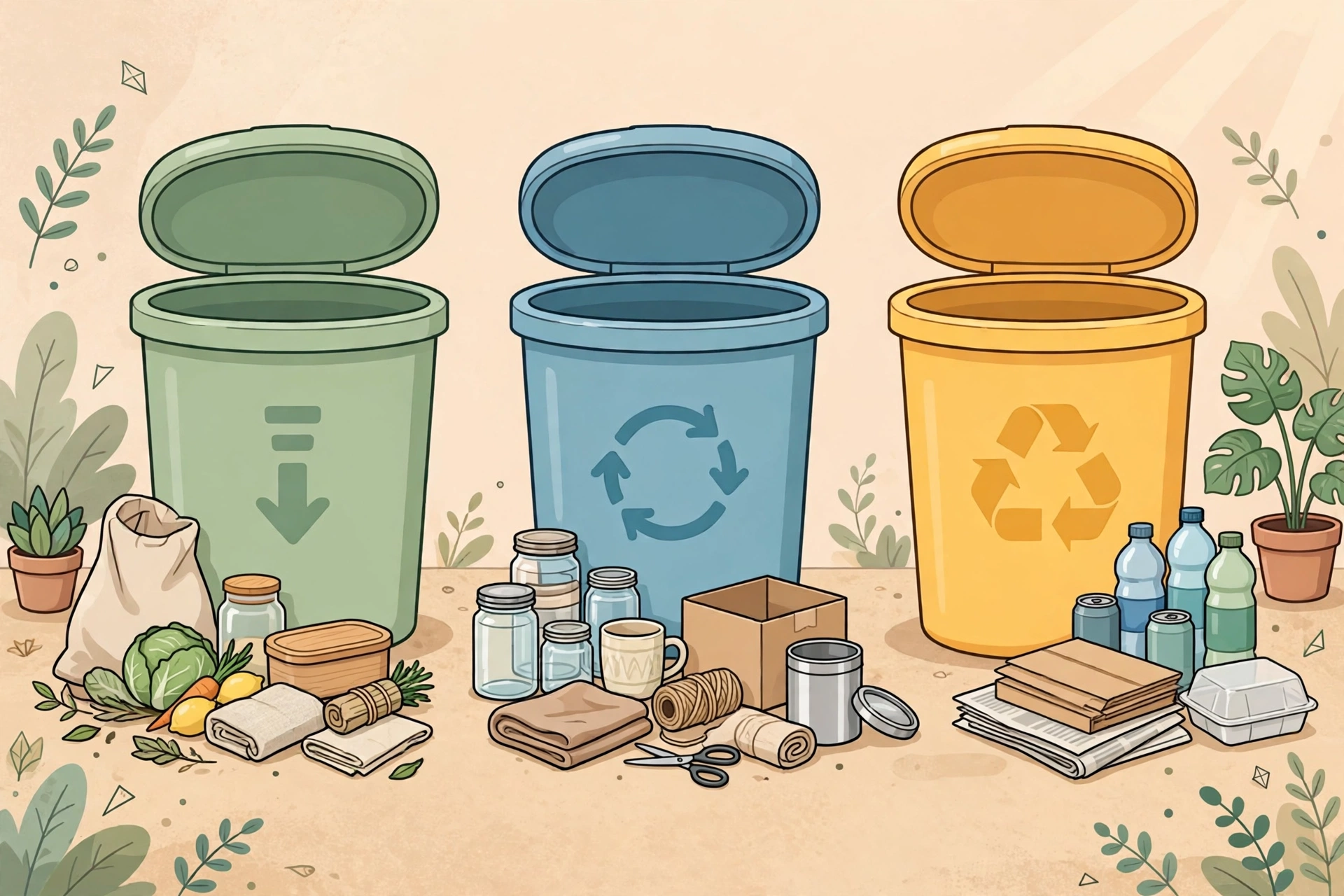
The three R’s are simple to teach with everyday examples. Reduce means using less. Reuse means using something again. Recycle means turning used materials into new ones.
Reduce: Light and Water Check
Walk through the home together and list easy ways to use less light and water.
You need: Paper, pen, pencil. Ages: 5–12.
- Walk room by room and note lights left on and taps to check.
- Post the list on the fridge and review it weekly.
Reuse: Turn a Jar Into Storage
Clean a jar, decorate it, and reuse it to store pencils or craft supplies.
You need: Clean jar, paint or paper, glue, supplies to store. Ages: 4–10.
- Wash and dry the jar, then decorate the outside.
- Let it dry, fill it, and place it on a shelf.
Recycle: Sort and Learn the Bins
Sort clean household items into the right bins and label each bin with pictures.
You need: Clean items, bins, paper labels, markers. Ages: 4–9.
- Gather clean paper, plastic, and metal items and sort each one.
- Draw picture labels and tape them to the bins.
Cleanup Activities and Saving Water and Energy at Home
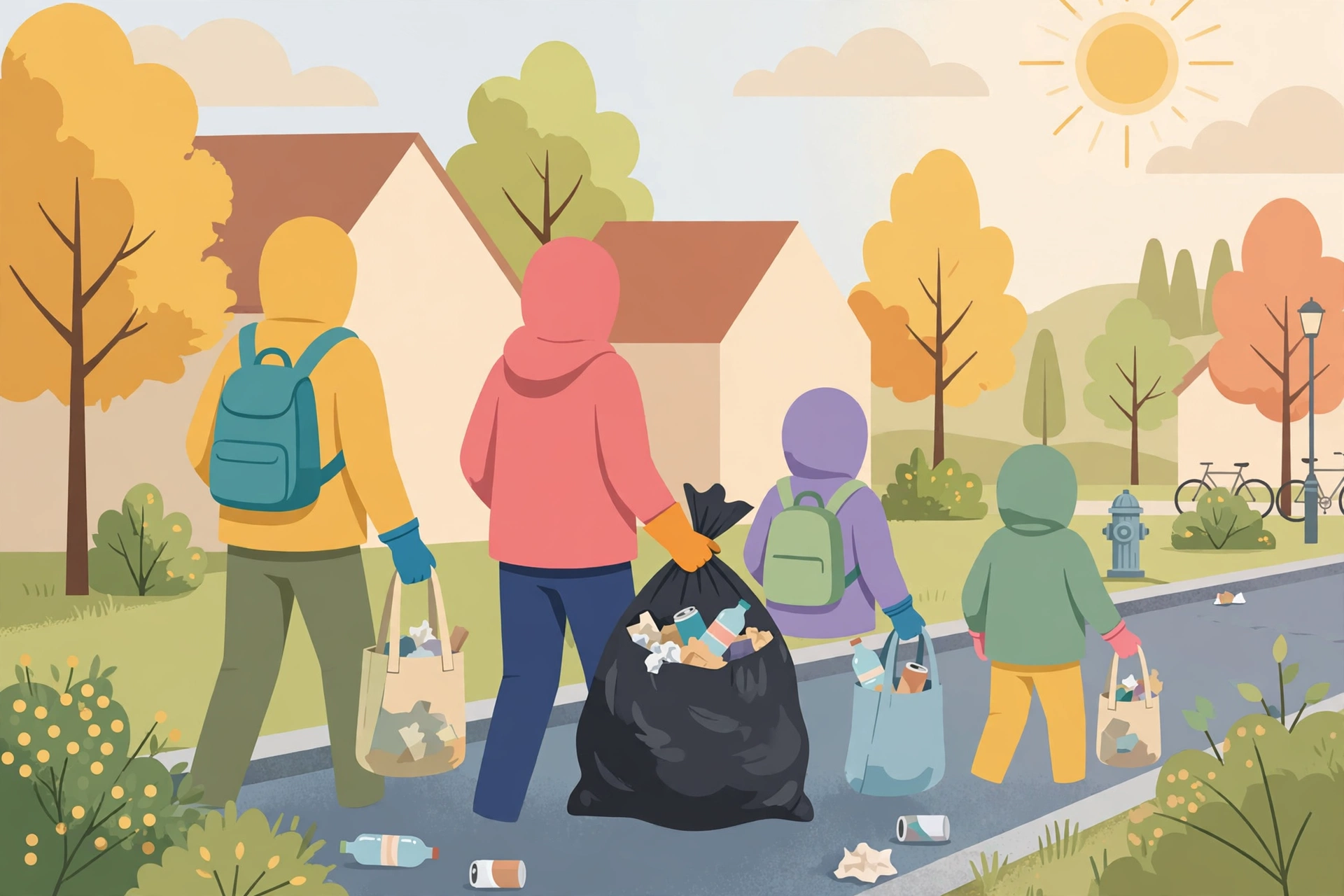
Adults lead every cleanup, children wear gloves, and everyone skips sharp or broken items. Wash hands well when you finish.
Neighborhood Litter Walk
Walk a familiar route with an adult, collecting litter in bags while staying on sidewalks.
You need: Gloves, bags, closed shoes, water. Ages: 5–12, with adult supervision.
- Put on gloves and agree on the route and return time.
- Collect litter, skipping sharp items, then tie bags and wash hands.
Park or Schoolyard Tidy-Up
Work in teams to tidy a park or schoolyard, then count the bags collected together.
You need: Gloves, bags, adult helpers. Ages: 6–12, with adult supervision.
- Split into teams, assign areas, and collect litter for a set time.
- Count the bags, wash hands, and thank every helper.
Water-Saving Habits at Home
Practice turning off the tap while brushing teeth and using leftover drinking water for plants.
You need: Cups, watering can, reminder chart. Ages: 4–10.
- Turn off the tap while brushing teeth.
- Pour leftover drinking water into a can, water plants, and mark the chart.
Energy-Saving Habits at Home
Switch off lights when leaving a room and use daylight from open curtains during the day.
You need: Reminder chart, stickers. Ages: 4–10.
- Open curtains in the morning to use daylight.
- Switch off lights when leaving a room and add a sticker to the chart.
Frequently Asked Questions About Earth Day Activities for Kids
Short answers to common questions.
What are 5 things you can do for Earth Day?
Try these five: 1) take a nature walk, 2) plant seeds or flowers, 3) make a craft from reused materials, 4) join a cleanup with an adult, 5) practice saving water and energy at home.
What activities can I do for Earth Day?
Choose nature walks, planting, recycling crafts, games, school projects, cleanups, and saving water and energy at home. The related questions “What are some ideas for activities for Earth Day?” and “What types of activities are typically done on Earth Day?” are answered the same way.
What do children do on Earth Day?
Children plant seeds, make crafts from reused materials, join cleanups with adults, play sorting and nature games, learn the three R’s, and take nature walks. Schools often add posters, recycling stations, and planting projects.
What do you do on Earth Day at school?
At school, children set up recycling stations, design posters, plant flowers or seeds, tidy the schoolyard with adult supervision, and play nature and sorting games. Teachers assign small teams so every class has a clear job.
What are the three R’s of Earth Day?
The three R’s are reduce, reuse, and recycle. Reduce means using less, such as turning off lights. Reuse means using something again, such as turning a jar into storage. Recycle means turning used materials into new ones through sorting.
What are some fun and engaging games for kids to learn about Earth Day?
Try a recycling sorting race, Earth bingo, a three R’s memory match, a nature scavenger hunt, and a color hunt on a walk. Keep rounds short and let children take turns leading.
What can toddlers do for Earth Day?
Toddlers can enjoy water play with cups, leaf collages with large pieces, sorting big items by color, and short nature walks with an adult. Keep play short, use large pieces, and stay nearby.